
Last updated September 22, 2026
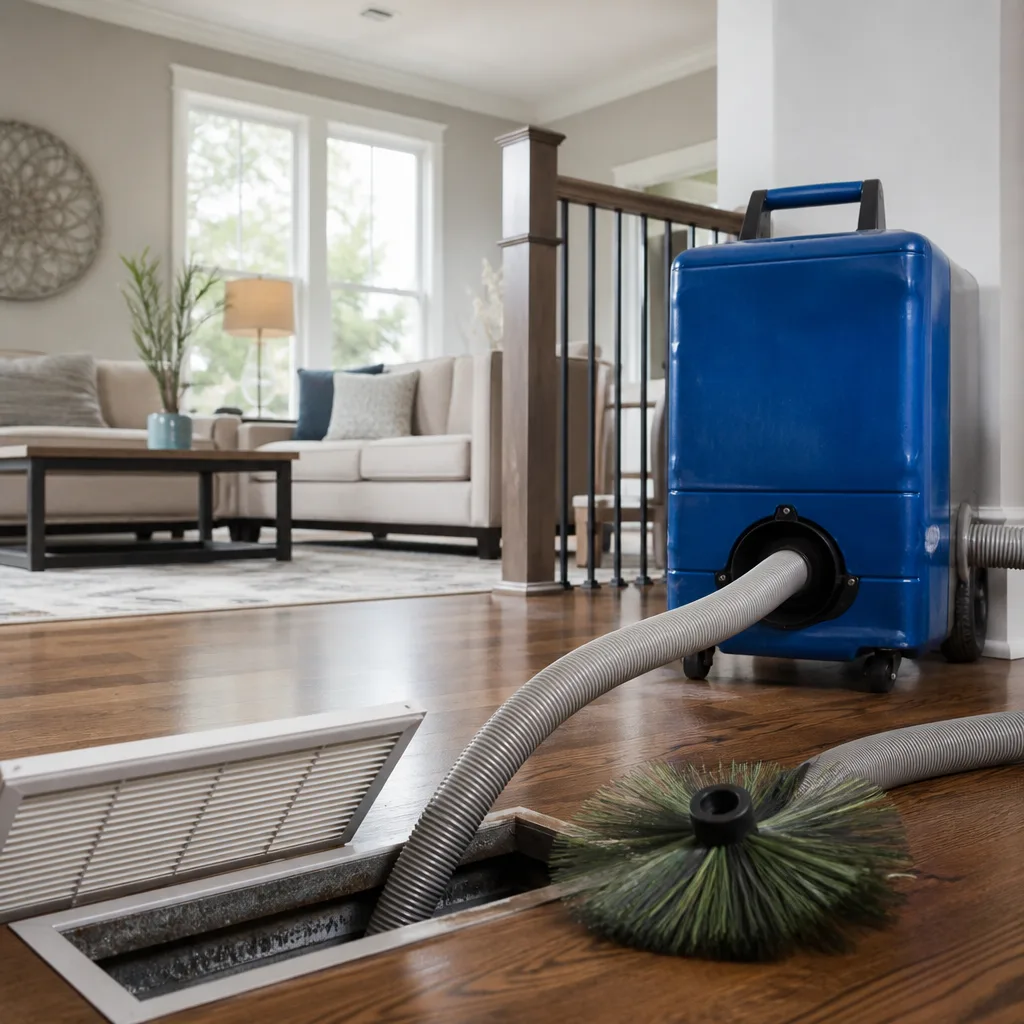
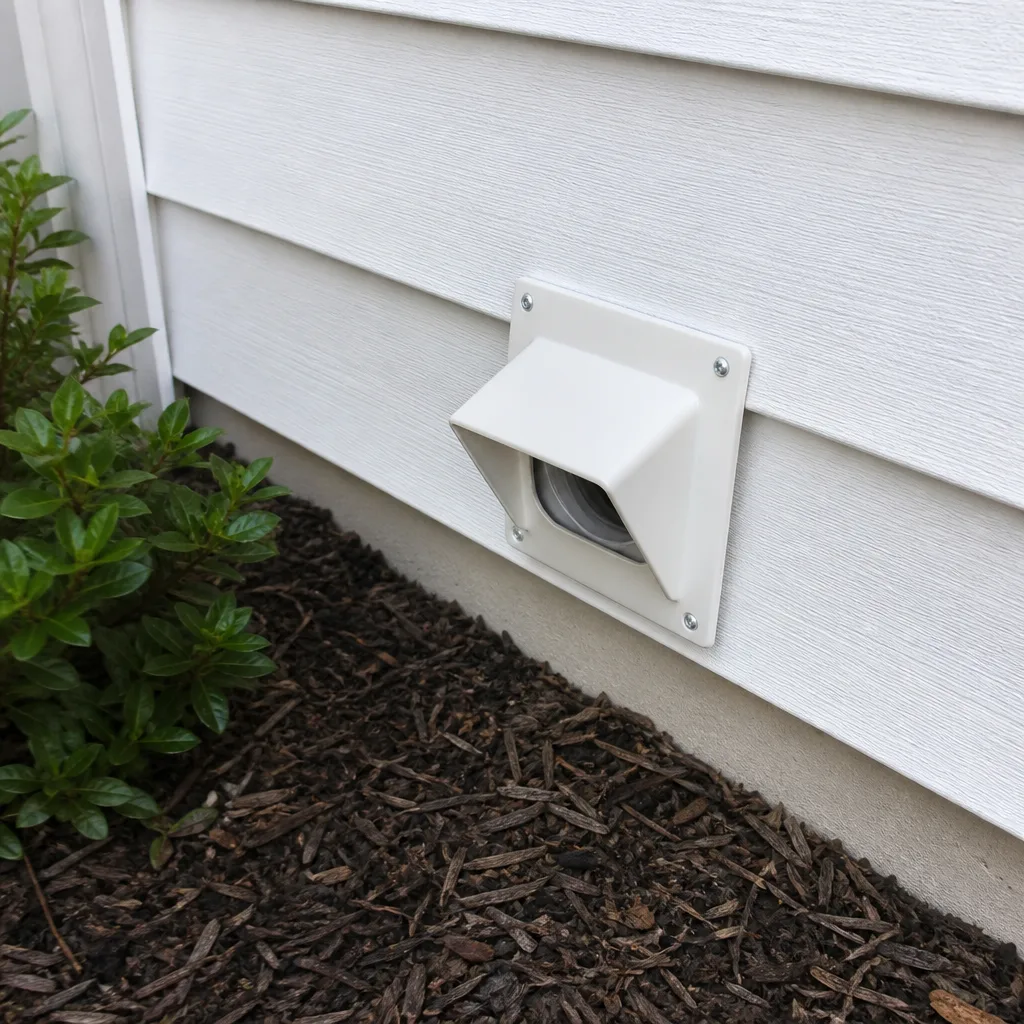
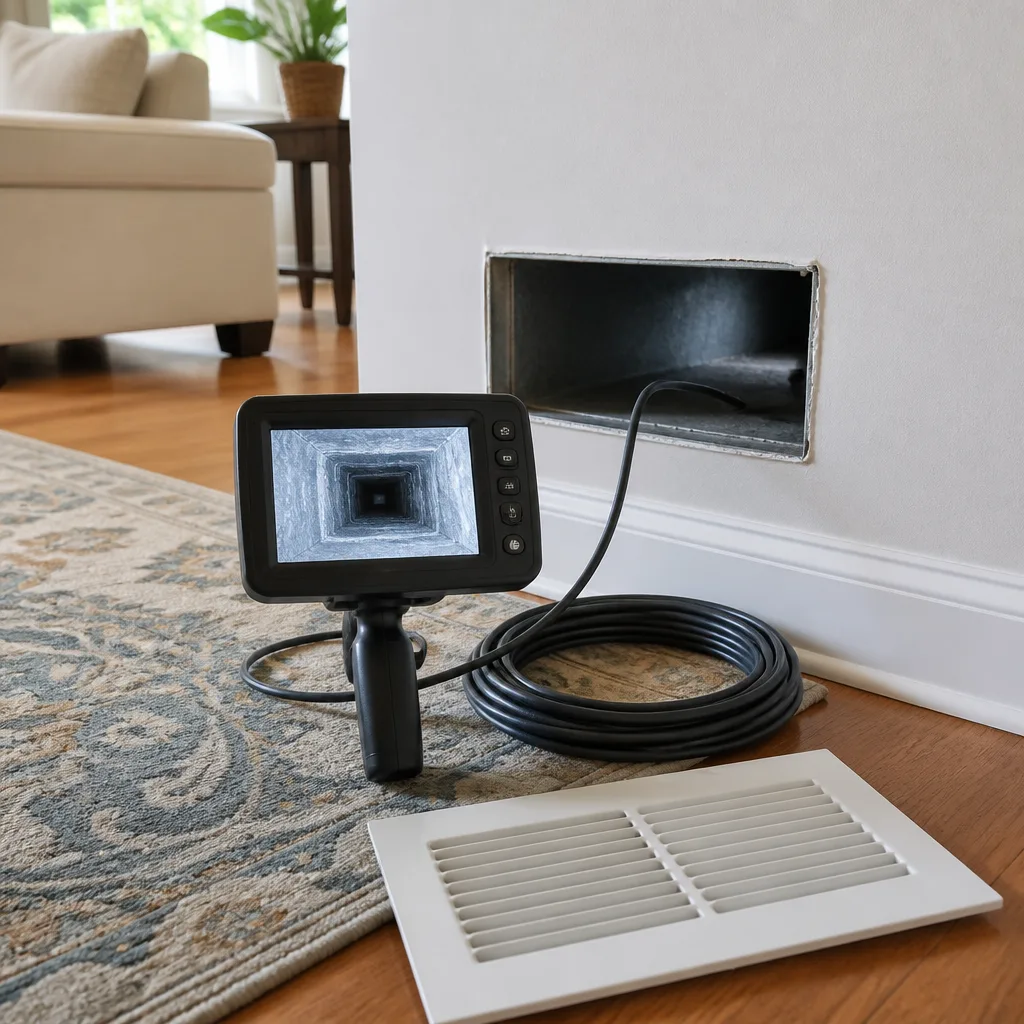
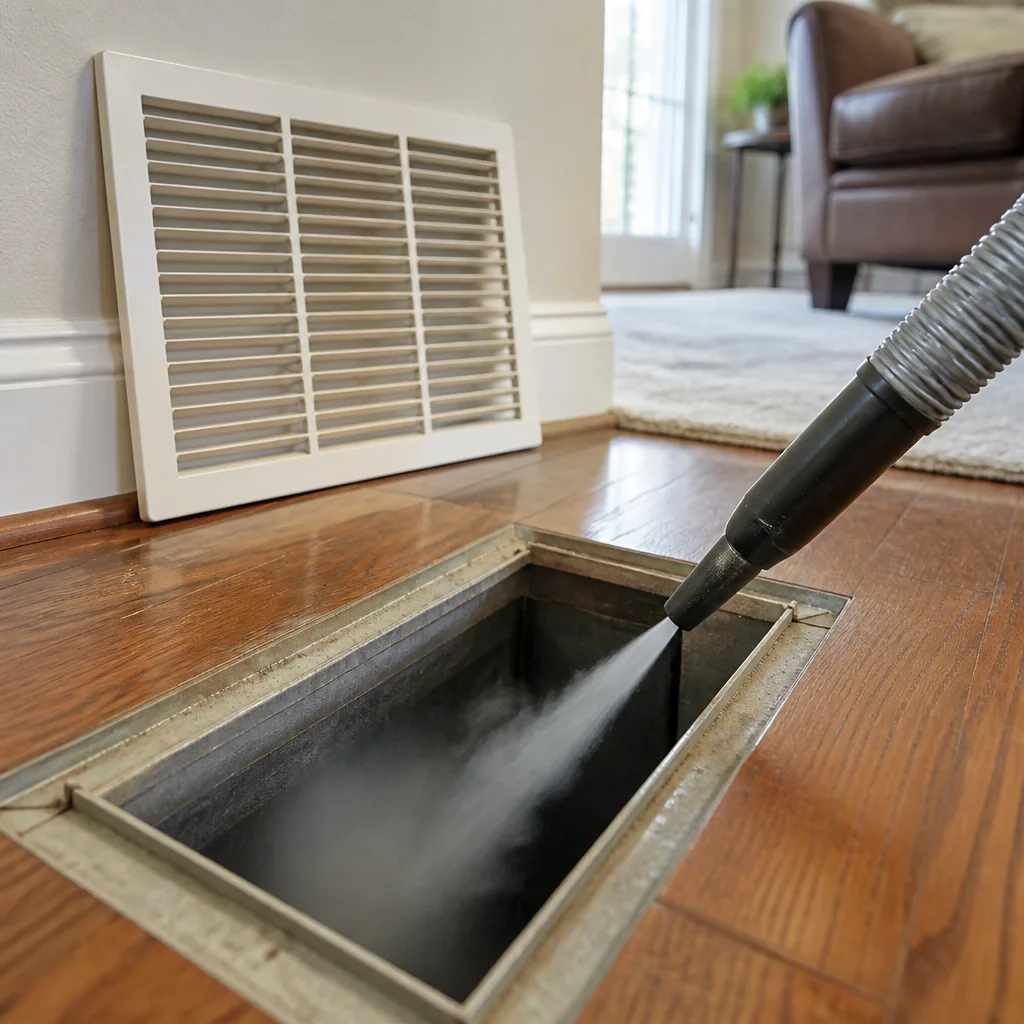
Whole-system duct and dryer vent check with before-and-after photos - you see exactly what came out of your vents
That "$99 whole-house special" is a bait ad - the real number appears once they are in your hallway, or the "clean" is a shop-vac at the register. We photograph the inside of your ducts before and after instead.
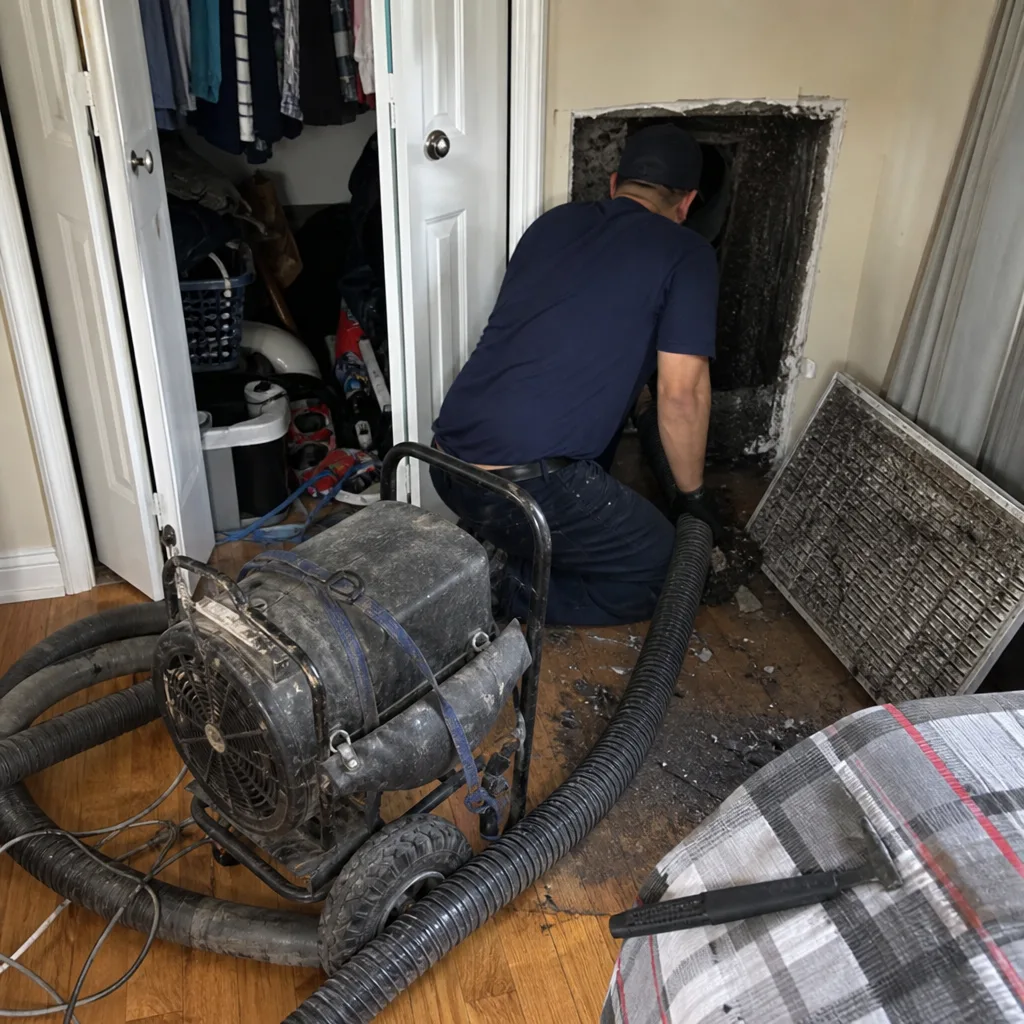 Before
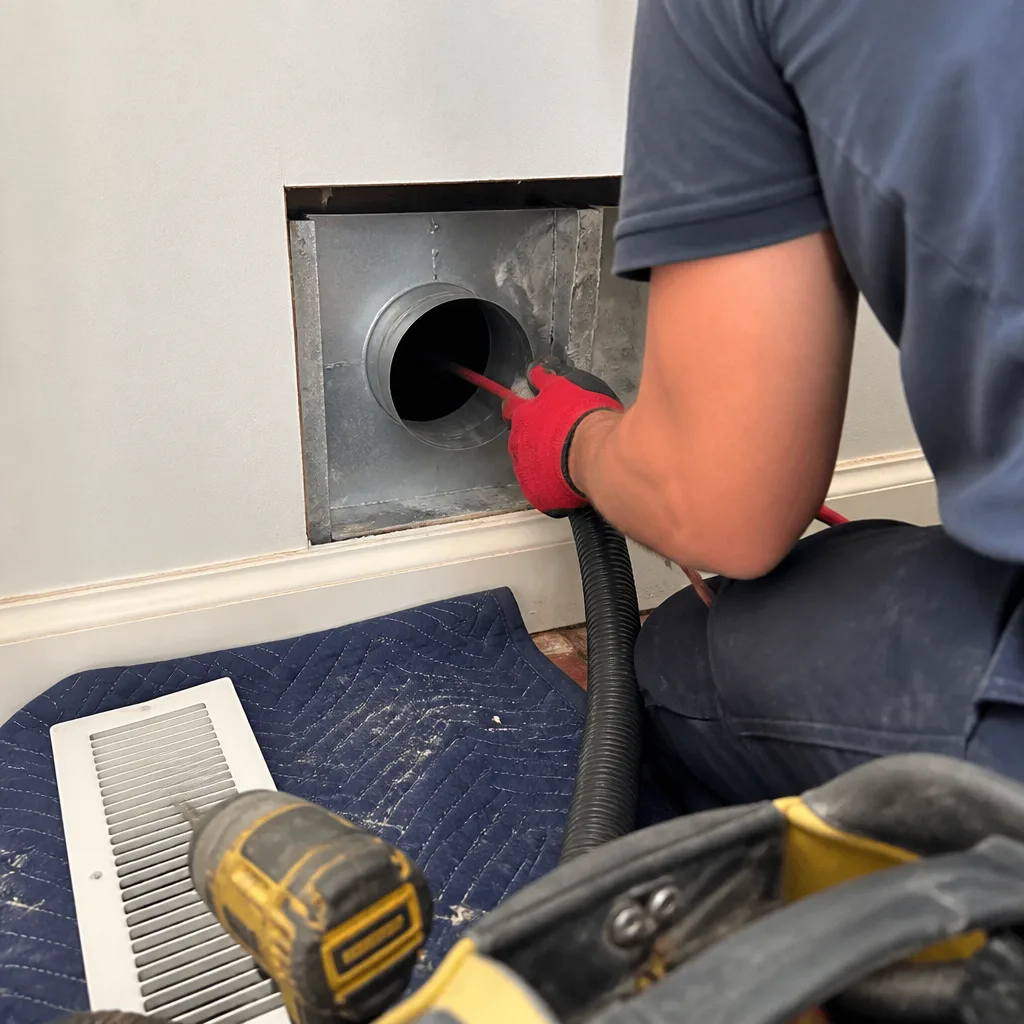 After
After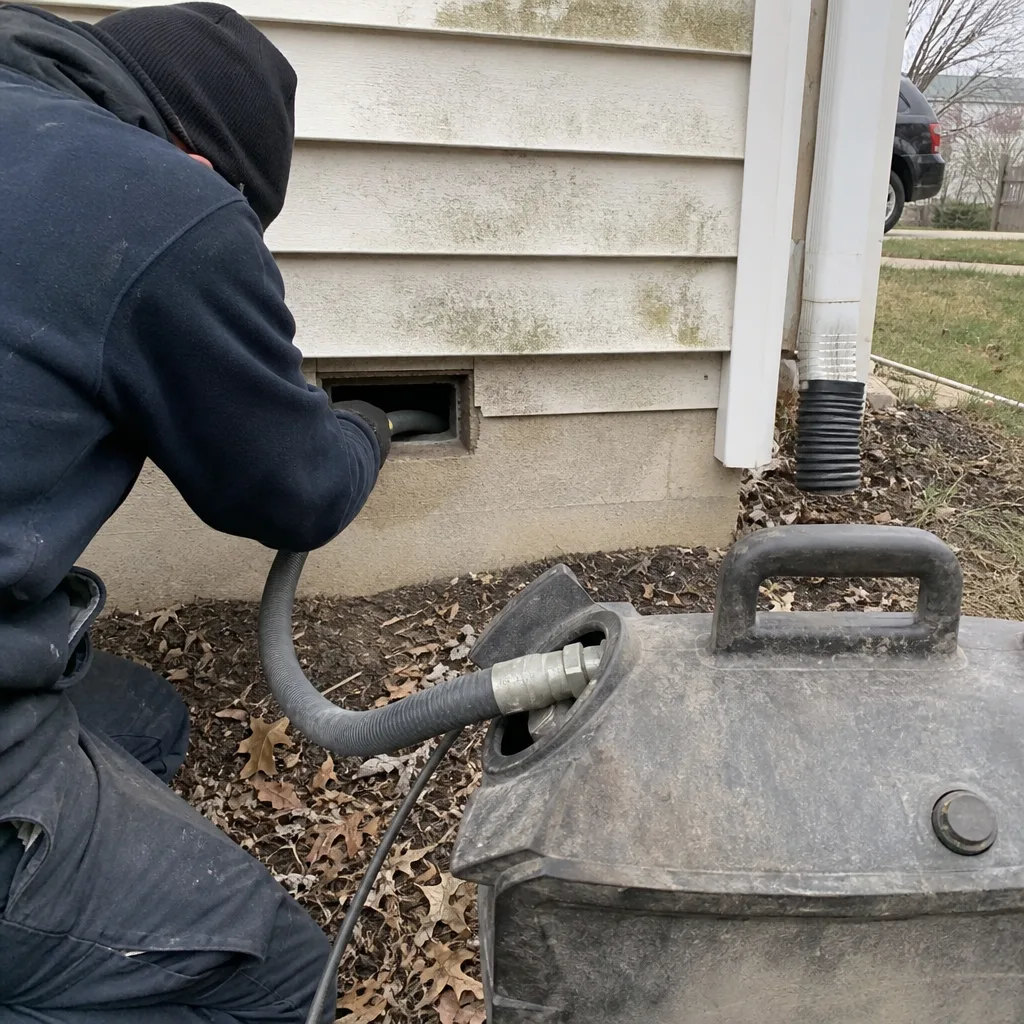 Before
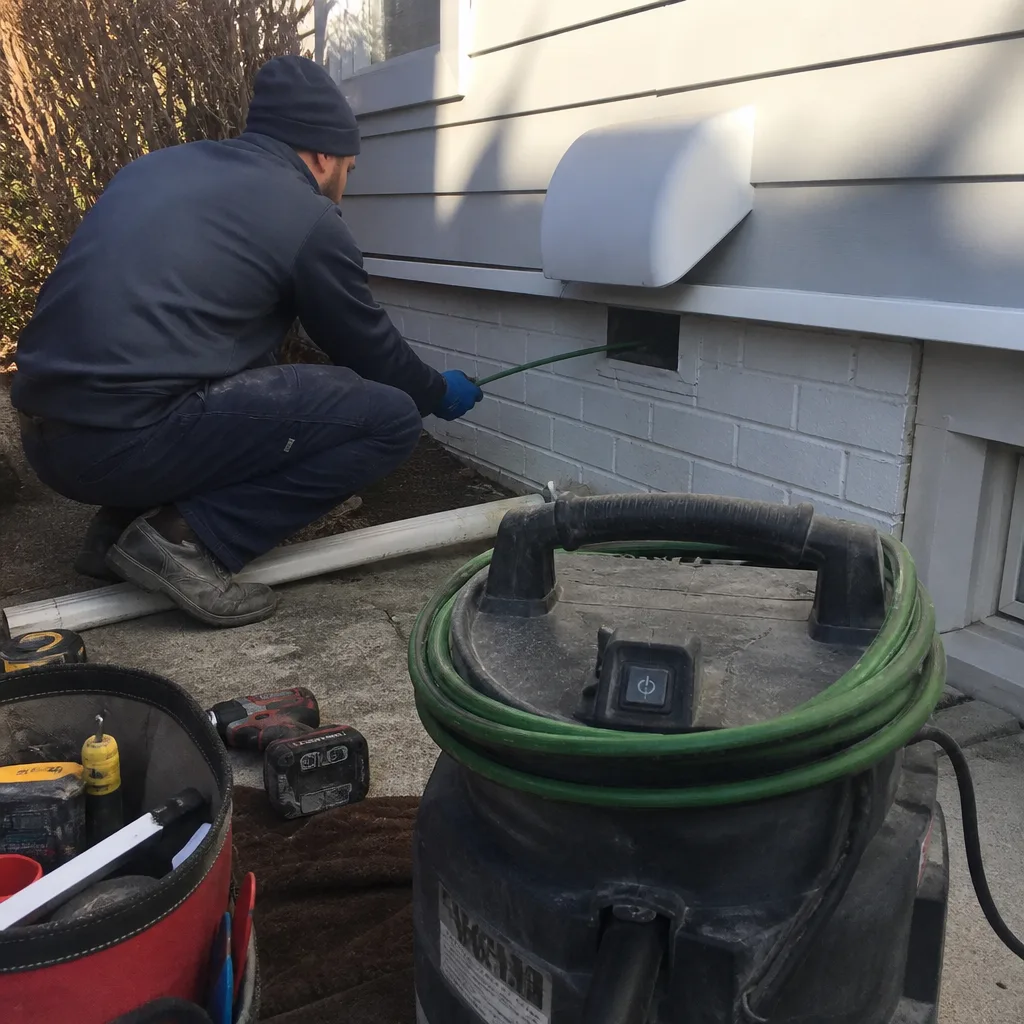 After
After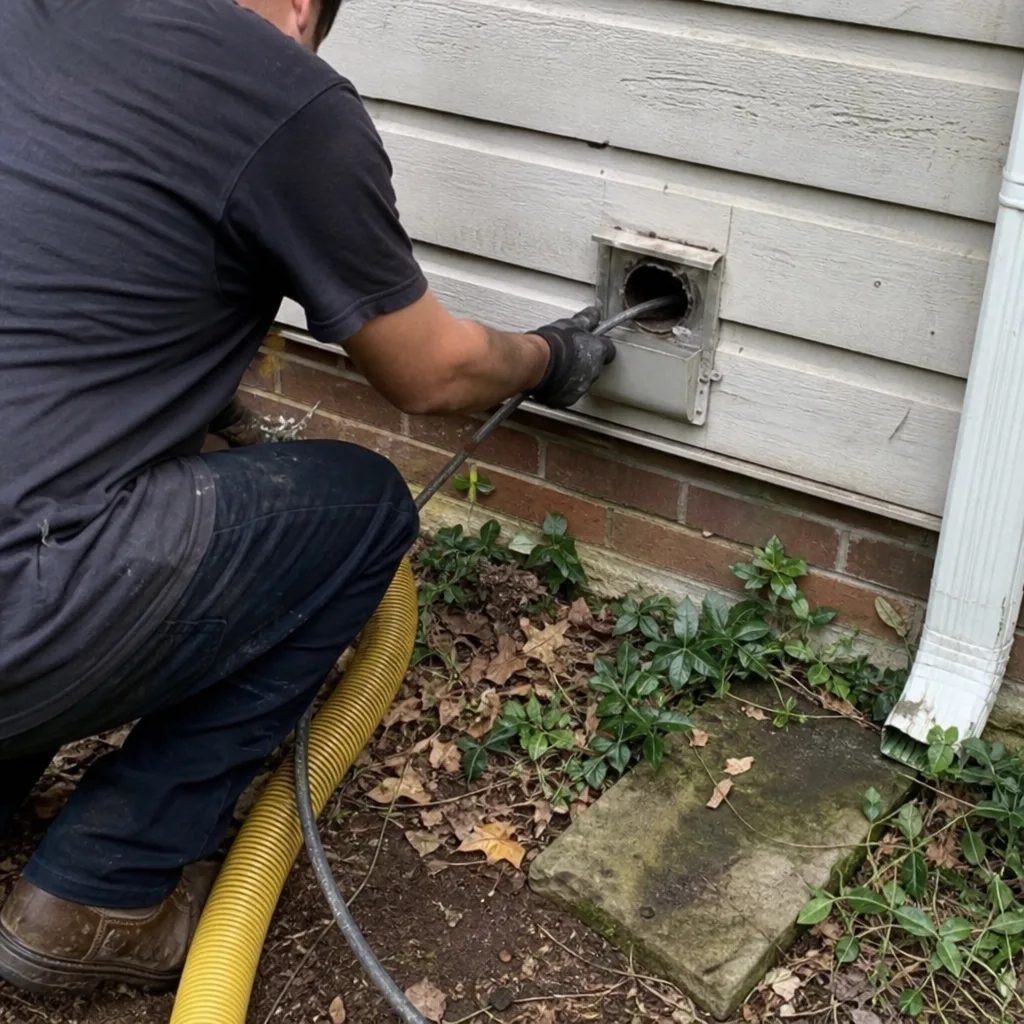 Before
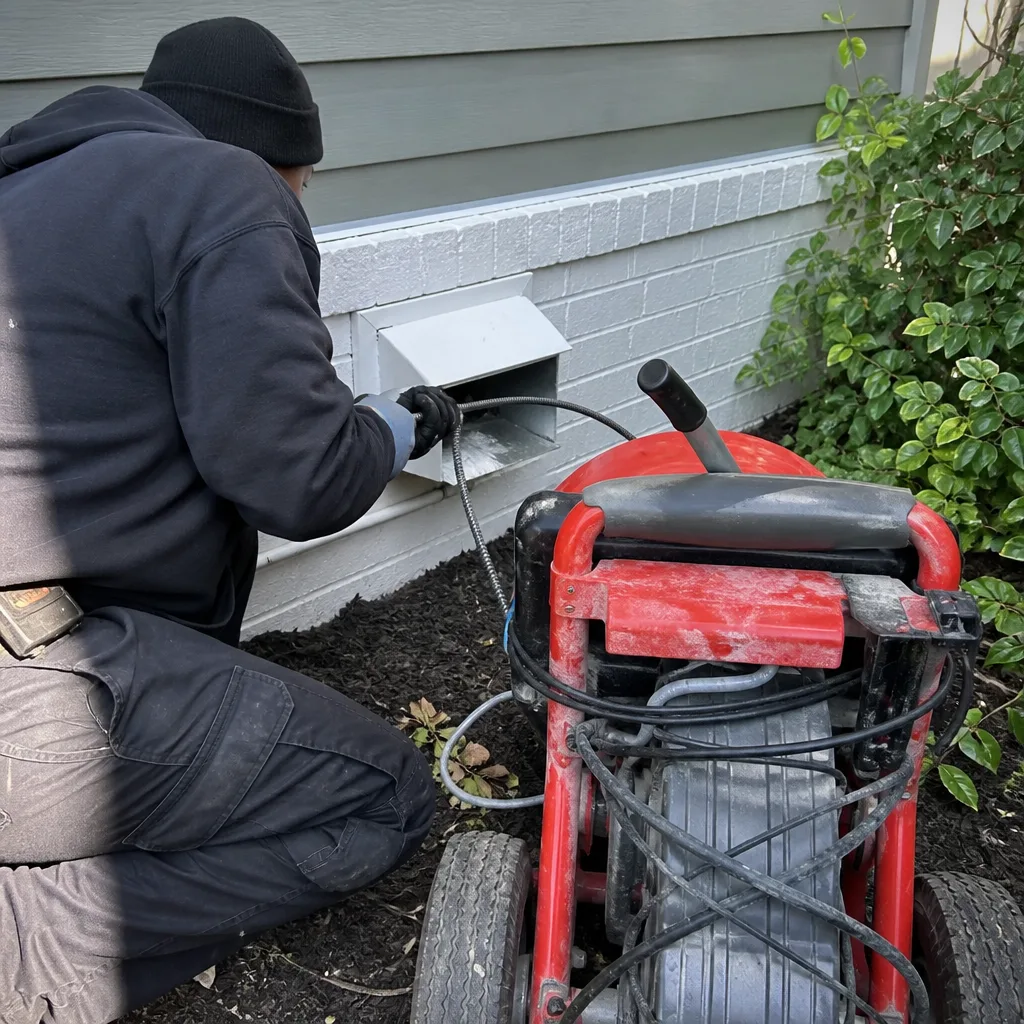 After
AfterHow to Hire a Air Duct Cleaning Contractor in Ashburn: A Step-by-Step Guide
Virginia does not license air duct cleaning contractors as a separate trade. Anyone with a van, a shop vacuum, and a stack of $79 coupons can operate legally in Ashburn tomorrow morning. That means the only protection a homeowner in Brambleton, Broadlands, or Ashburn Village has is knowing exactly what to ask before the truck pulls into the driveway. This guide-along with our Seasonal Air Duct Cleaning Care for Ashburn: Year-Round Homeowner’s Guide-gives you a specific vetting script, the three documents to request, and the exact answers that should disqualify a contractor before they schedule.
Quick Answer
To hire an our Air Duct Cleaning services contractor in Ashburn, request three documents before scheduling: proof of NADCA membership or equivalent certification, a written scope of work that names the equipment by brand, and a fixed written price for the complete system. Disqualify any contractor who offers a “final price after inspection,” advertises a $79 whole-house special, or cannot name the extraction equipment they use. Verify their Virginia business registration and liability insurance through the State Corporation Commission and DOLI portals before you book.
Table of Contents
- The Virginia Licensing Gap: What “Legal” Actually Means
- The Three Documents to Request Before Scheduling
- The Vetting Script: Exact Questions and Disqualifying Answers
- NADCA Certification vs. “Certified Technicians”: Know the Difference
- How to Verify a Virginia Contractor in Under 5 Minutes
- The One Contractual Clause Every Agreement Needs
- Ashburn-Specific Considerations: Climate, Housing, and Code
- Common Mistakes to Avoid
- When to Call a Professional
- Frequently Asked Questions
BeforeAfterThe Virginia Licensing Gap: What “Legal” Actually Means
In Virginia, air duct cleaning falls under general contracting law, not a specialized trade license. A contractor needs a CleanRun Air Duct Cleaning Ashburn home business license from the locality and general liability insurance, but there is no state examination for duct cleaning knowledge, no continuing education requirement, and no equipment standard. The Department of Professional and Occupational Regulation does not list air duct cleaning as a regulated trade.
This matters in Ashburn because the housing stock is relatively young and high-value. Most homes in One Loudoun, Belmont Station, or the Goose Creek Village area were built between 2000 and 2020. Their duct systems use flexible ductwork, multi-zone HVAC configurations, and tighter building envelopes than older Virginia markets. A contractor who learned the trade in a 1960s ranch house in another state may not understand how Ashburn’s newer construction affects airflow patterns, condensation risk, or debris accumulation points.
The practical result: “licensed and insured” on a website means almost nothing specific to duct cleaning competence. It means the business paid for a general business license and carries liability coverage. It does not mean the technician understands negative-pressure extraction, can identify a compromised plenum, or knows how to protect a variable-speed blower during cleaning.
Homeowners in Ashburn should treat contractor vetting as self-defense, not a formality. The sections below show exactly how.
The Three Documents to Request Before Scheduling
Every reputable contractor should be able to produce these three documents before you agree to a date. If any are missing or evasive, stop the conversation.
Document 1: Proof of NADCA Membership or Equivalent Certification
The National Air Duct Cleaners Association (NADCA) is the only nationally recognized body that certifies both companies and individual technicians in HVAC system cleaning. A NADCA-certified company has met specific insurance requirements, agreed to NADCA’s cleaning standards, and employs at least one Air Systems Cleaning Specialist (ASCS) who passed a proctored examination.
Ask for the company’s NADCA membership number. Then verify it at nadca.com/find-a-professional. Do not accept “our technicians are NADCA-certified” from a company that is not itself a member. Individual technician certifications without company membership do not bind the business to NADCA standards or insurance requirements.
Equivalent certifications exist through the Indoor Air Quality Association (IAQA), but NADCA remains the standard in the Mid-Atlantic market. If a contractor cites IAQA or another body, ask specifically what standard they follow for cleaning scope and post-job verification.
Document 2: Written Scope of Work Naming Equipment by Brand
The scope of work should describe exactly what will be cleaned, with what equipment, and to what standard. At minimum, it should list:
- Number of supply and return duct runs to be cleaned
- Whether the plenum (the central distribution box connected to your HVAC unit) is included
- Whether registers and grilles are removed and cleaned separately
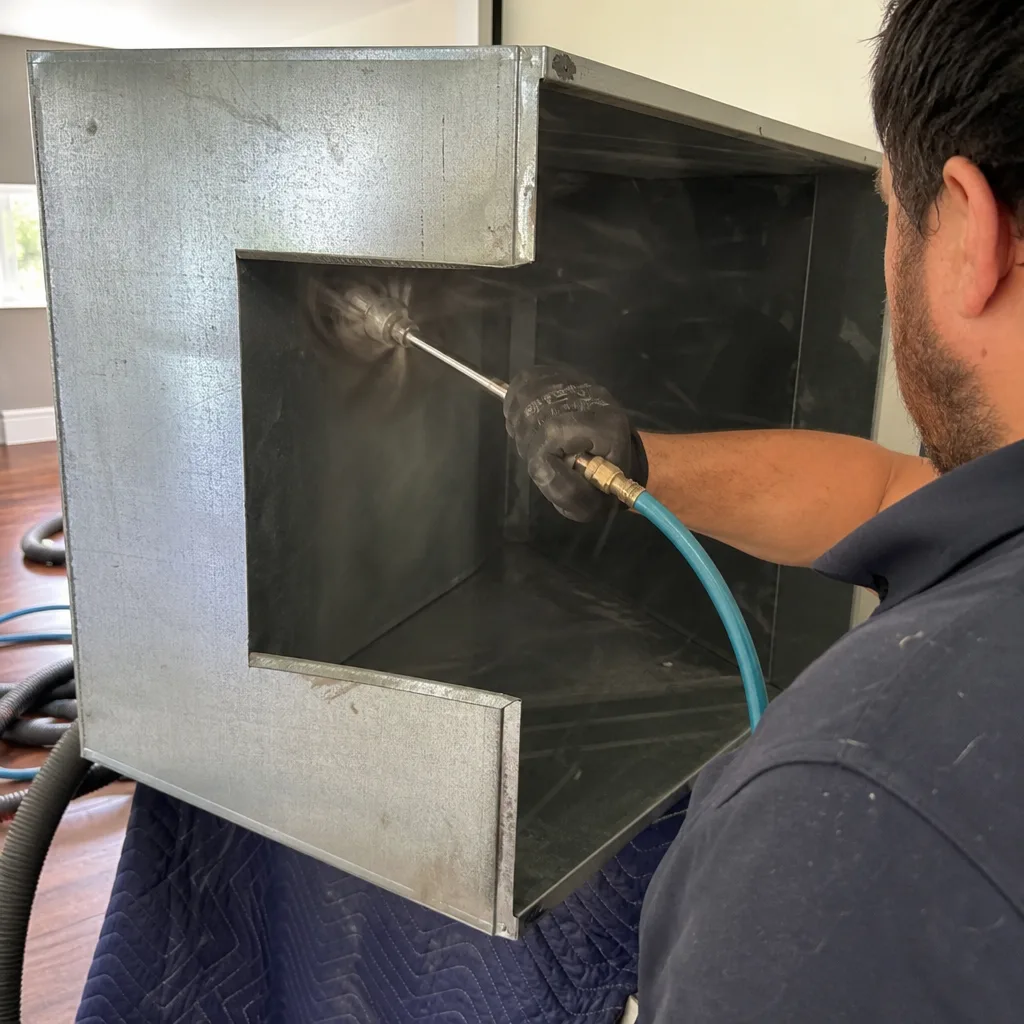
- Specific equipment brands and models for extraction and agitation
- Method of debris containment (negative-pressure HEPA collection, portable containment, etc.)
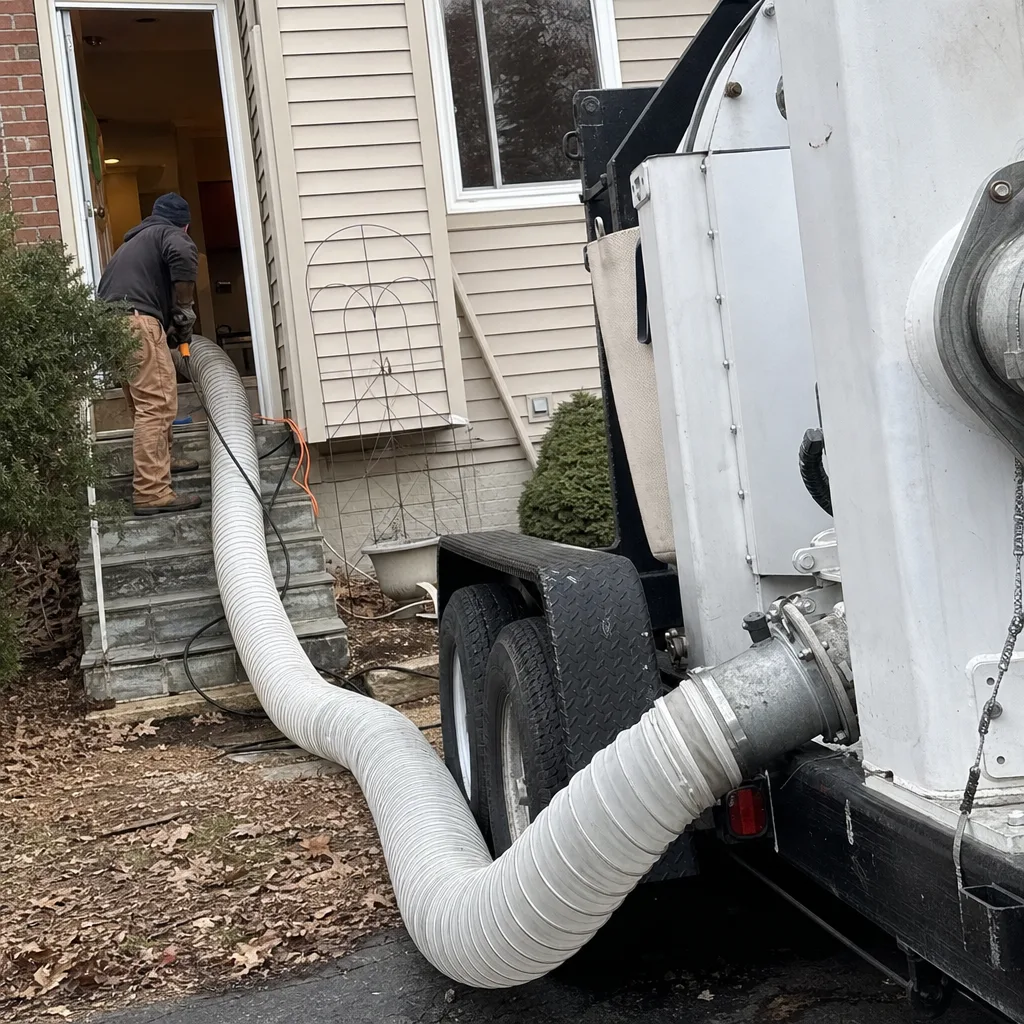
A scope that says “high-powered truck-mount equipment” without naming the manufacturer or model is a warning sign. Professional-grade equipment in this trade comes from recognized manufacturers like Rotobrush, Nikro, and Abatement Technologies. A contractor using these tools can name them. One who cannot name them may be using inadequate equipment or renting by the day.
At CleanRun, our scopes name the specific equipment assigned to each job, drawn from our roster of Rotobrush, Nikro, Abatement Technologies, Honeywell, Aprilaire, and Guardsman equipment. The customer sees it in writing before work starts, under Haven Standard Clause 1.
Document 3: Fixed Written Price for the Complete System
This is non-negotiable. The price must be fixed, written, and inclusive of the complete system described in the scope. Not a “starting at” figure. Not a range. Not an estimate that “might change based on what we find.”
The bait-and-switch structure common in this industry works like this: a $79 or $99 coupon gets the van to your house, followed by discovery of “additional vents,” “heavy contamination,” or “required sanitizing” that multiplies the final invoice. In Ashburn’s competitive market, we see this pattern regularly. The initial price is not a mistake or misunderstanding. It is a deliberate customer acquisition tactic.
A legitimate contractor can assess your system over the phone or through a brief on-site inspection and deliver a fixed price before work begins. At CleanRun, we have done this on every job since 2013. The written price is a deliverable, not a negotiation.
The Vetting Script: Exact Questions and Disqualifying Answers
Use this script in your initial phone call or email exchange. The disqualifying answers are based on patterns we have observed in Ashburn and across Northern Virginia.
Question 1: “Are you a NADCA-certified company, and what is your membership number?”
Good answer: “Yes, our membership number is [specific number], and you can verify it on NADCA’s website. We also have [X] ASCS-certified technicians on staff.”
Disqualifying answer: “Our technicians are certified” (without company membership), “We’re working on our certification,” or any deflection to “years of experience” instead of verified credentials.
Question 2: “What specific equipment will you use on my system, and what are the manufacturer names?”
Good answer: “We use a [specific model] negative-pressure extractor from [manufacturer] and [specific model] rotary brushes from [manufacturer] for agitation. I can email you the equipment list.”
Disqualifying answer: “We use high-powered truck-mount equipment” with no further detail, “commercial-grade vacuums” without naming HEPA filtration or negative-pressure capability, or any reluctance to specify brands.
Question 3: “Will you give me a fixed written price before any work starts, and does it include the complete system?”
Good answer: “Yes. After we confirm your square footage and register count, we’ll email you a written scope with a fixed price for the complete system. No changes unless you add services.”
Disqualifying answer: “We’ll give you the final price after we inspect,” “It starts at $[low number] and depends on what we find,” or any reference to per-vent pricing that was not in the initial quote.
Question 4: “What documentation do I receive when the job is done?”
Good answer: “You’ll receive before-and-after photos of each duct run, a completed checklist showing what was cleaned, and your invoice with the original written price.”
Disqualifying answer: “We’ll show you the debris we collected,” “You can trust us to do it right,” or any suggestion that visual verification is unnecessary or unavailable.
Question 5: “What happens if I find problems or incomplete work after you leave?”
Good answer: “We have a written remedy policy. If you schedule a re-inspection and find incomplete work, we return and correct it at no charge within [specific timeframe].”
Disqualifying answer: “Call us if there’s an issue,” “We stand behind our work,” or any vague assurance without a specific written process.
NADCA Certification vs. “Certified Technicians”: Know the Difference
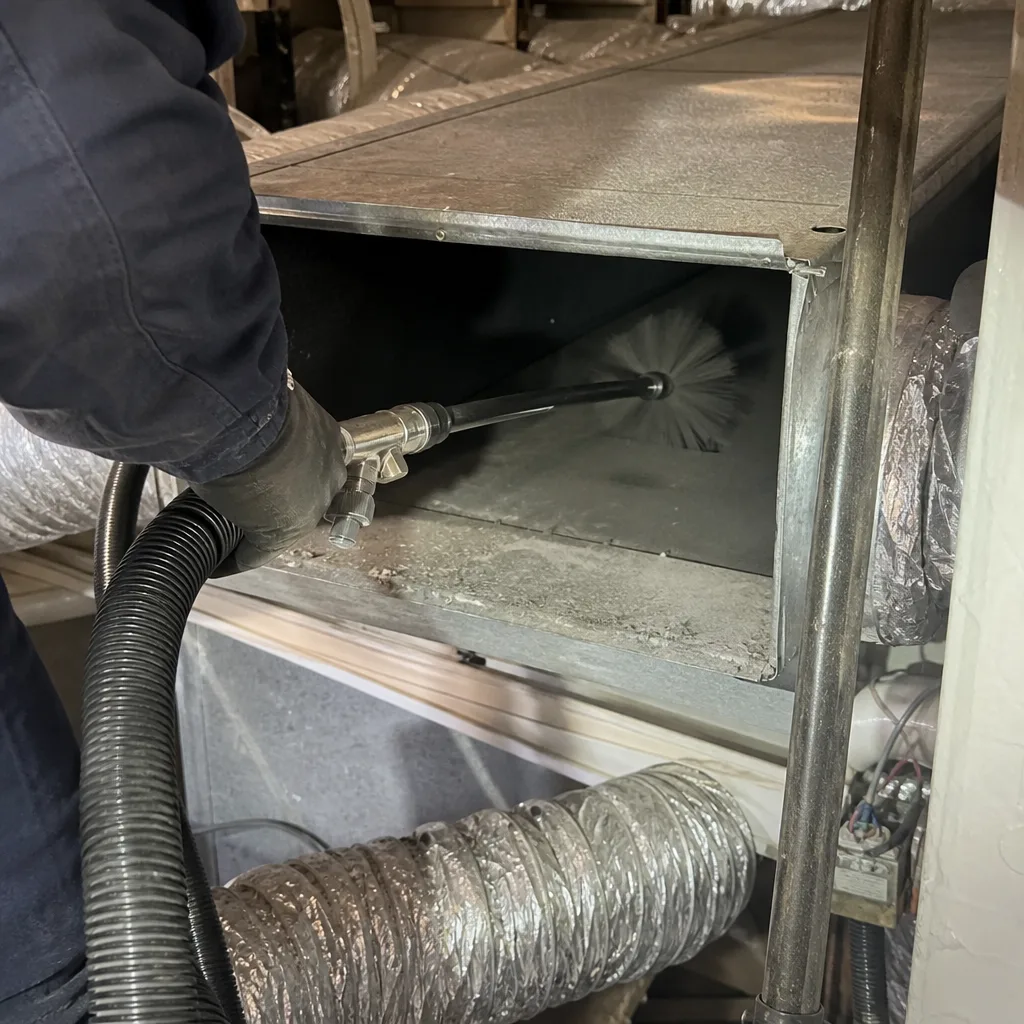
This distinction confuses even careful homeowners, and some contractors exploit that confusion deliberately.
NADCA company certification requires:
- Current general liability insurance (typically $1 million minimum)
- At least one actively employed ASCS-certified technician
- Agreement to follow NADCA’s Assessment, Cleaning, and Restoration (ACR) standard
- Annual renewal with verification
When a company is NADCA-certified, the business itself is accountable to the standard. If work fails to meet ACR requirements, NADCA has a complaint and disciplinary process.
“Certified technicians” on an uncertified company’s website means only that individuals, possibly former employees or contractors, once passed an exam. The company has no obligation to maintain insurance, follow ACR standards, or submit to NADCA discipline. The certification may be expired, held by someone who no longer works there, or misrepresented entirely.
In Ashburn’s high-turnover housing market, we have encountered technicians claiming NADCA credentials who could not explain basic ACR requirements, such as the mandatory inspection of the HVAC unit before cleaning or the prohibition against using biocides without specific customer documentation. These were not edge cases. They were working technicians dispatched to homes in Loudoun County.
Always verify company membership independently. Do not trust website badges or verbal assurances.
How to Verify a Virginia Contractor in Under 5 Minutes
Virginia provides two free online tools that expose most fraudulent or underinsured contractors. Use both before scheduling any work in Ashburn.
Step 1: State Corporation Commission (SCC) Business Search
- Visit scc.virginia.gov
- Select “Business Entity Search”
- Enter the company’s exact legal name (not the trade name; check their website or proposal)
- Verify the status shows “Active” and the business type matches what they claim
- Note the registered agent and principal office address. If these differ significantly from the local address advertised, ask why
A contractor operating under a dissolved entity, an out-of-state registration with no Virginia authority, or a name that does not match their marketing materials is operating outside legal requirements. This is more common than homeowners expect, particularly with companies that use generic names like “Virginia Air Duct Pros” or “NoVA HVAC Cleaning.”
Step 2: Department of Labor and Industry (DOLI) License and Insurance Verification
- Visit doli.virginia.gov
- Navigate to “License Lookup” or “Verify a License”
- Search for the contractor’s business or individual license
- For liability insurance, request a Certificate of Insurance (COI) directly from the contractor, naming you as the certificate holder
The COI should show general liability coverage active through the date of your scheduled work. Do not accept a screenshot or “we’re covered” verbal assurance. The certificate comes from the insurance broker, not the contractor, and cannot be easily forged.
These two checks take under five minutes and have saved Ashburn homeowners from contractors with expired registrations, lapsed insurance, or no Virginia legal presence at all.
The One Contractual Clause Every Agreement Needs
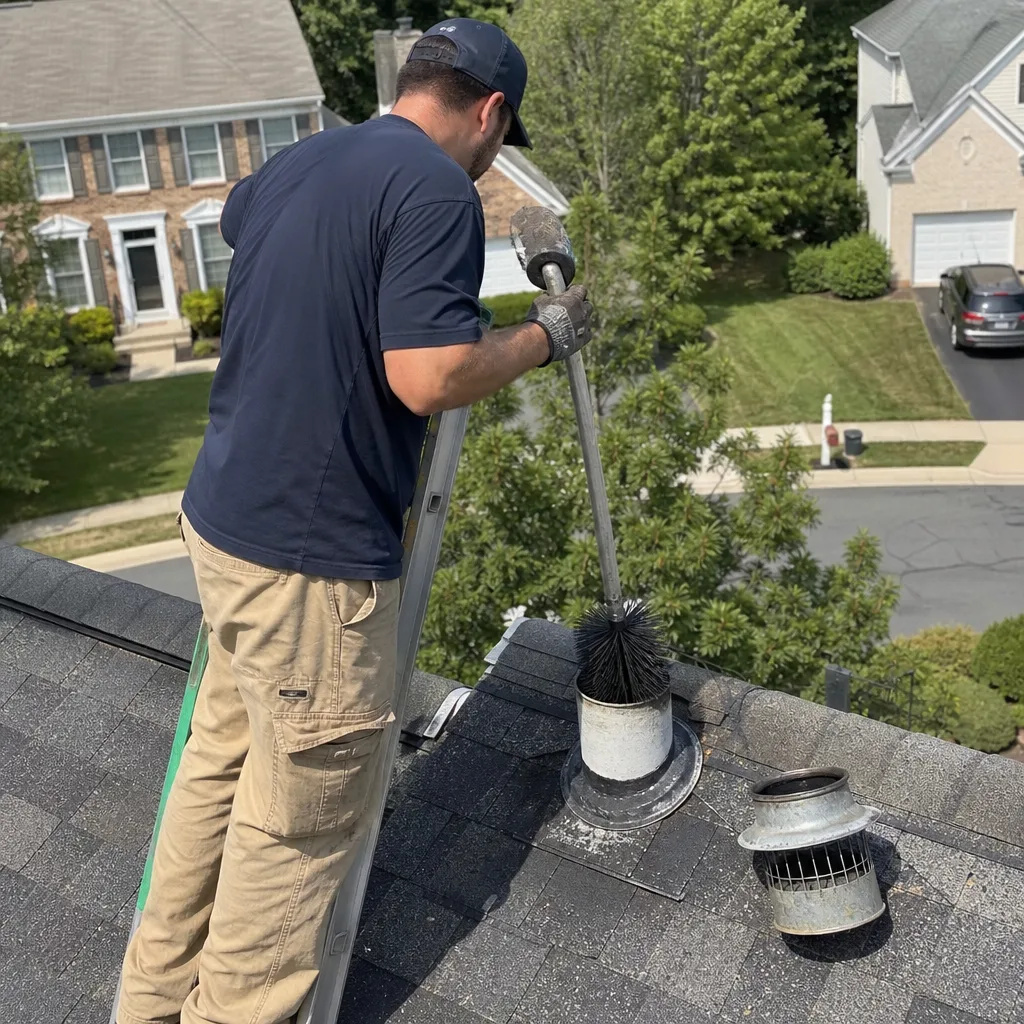
Beyond price and scope, every written agreement for air duct cleaning should contain a specific remedy clause. This is the contractual protection that matters after the truck leaves.
The clause should state, in writing:
- What constitutes incomplete or unsatisfactory work (specific criteria, not general satisfaction language)
- How the customer requests a re-inspection (method, timeframe, any cost)
- What the contractor will do if the re-inspection confirms incomplete work (return, re-clean, refund, or other specific remedy)
- Time limit for the contractor to complete the remedy
Generic “satisfaction guaranteed” language fails this test. It provides no process, no timeline, and no specific commitment. It is marketing copy, not contractual protection.
At CleanRun, the 365-Day Done Right Promise functions as this clause: if the work is not right, we make it right, backed in writing on every job. The customer does not need manager approval or a dispute process. The written agreement controls. Haven Standard Clause 4: Documented Accountability specifies that the photo record, the written scope, and the remedy policy travel together as a single job record.
When evaluating another contractor, ask to see their remedy clause in writing before you sign. If they do not have one, or if they refer to “our policy” without producing the document, this is a disqualifying signal.
Ashburn-Specific Considerations: Climate, Housing, and Code
Ashburn’s location in Loudoun County creates specific conditions that affect duct cleaning needs and contractor selection; see more guides & resources for related reading.
Climate and Seasonal Patterns
Ashburn sits in the transition zone between humid subtropical and humid continental climates. Summer humidity regularly exceeds 70%, and winter temperature swings can stress HVAC systems cycling between heating and cooling modes within the same week. In our experience across Ashburn neighborhoods from Loudoun Valley Estates to Riverside, this creates two common duct conditions:
- Condensation-related microbial growth in insulated flex duct, particularly in attic runs where temperature differentials are greatest
- Accelerated debris accumulation at return elbows and filter transitions due to near-constant system operation during shoulder seasons
A contractor unfamiliar with Mid-Atlantic humidity patterns may not inspect for condensation staining or may clean debris without addressing the moisture source that will regenerate it.
Housing Stock and Construction Era
Most Ashburn homes were built during the 2000-2020 construction boom. This matters for duct cleaning because:
- Flexible ductwork (common in this era) requires different agitation techniques than rigid metal duct. Over-aggressive brushing can tear flex duct internally, creating leaks that reduce system efficiency
- Tighter building envelopes mean lower natural ventilation. Contaminants remain in circulation longer, but also mean contractors must be more careful about pressure balancing during negative-pressure extraction
- Many homes have multi-zone HVAC with electronically controlled dampers. A contractor who does not verify damper position before cleaning may leave zones partially blocked
Ask specifically whether the contractor has worked in homes built during your construction era and whether they adjust technique for flex duct versus rigid metal.
Local Permit and Code Context
Loudoun County does not require a permit for routine air duct cleaning. However, if cleaning reveals duct damage requiring repair or replacement, or if the contractor proposes modifying duct routing, permit requirements may apply. A contractor who proposes structural duct modifications without mentioning permits is either unaware of local requirements or willing to proceed illegally.
The Air Duct Cleaning in Ashburn page includes additional detail on when duct repair triggers permit requirements in Loudoun County.
Common Mistakes to Avoid
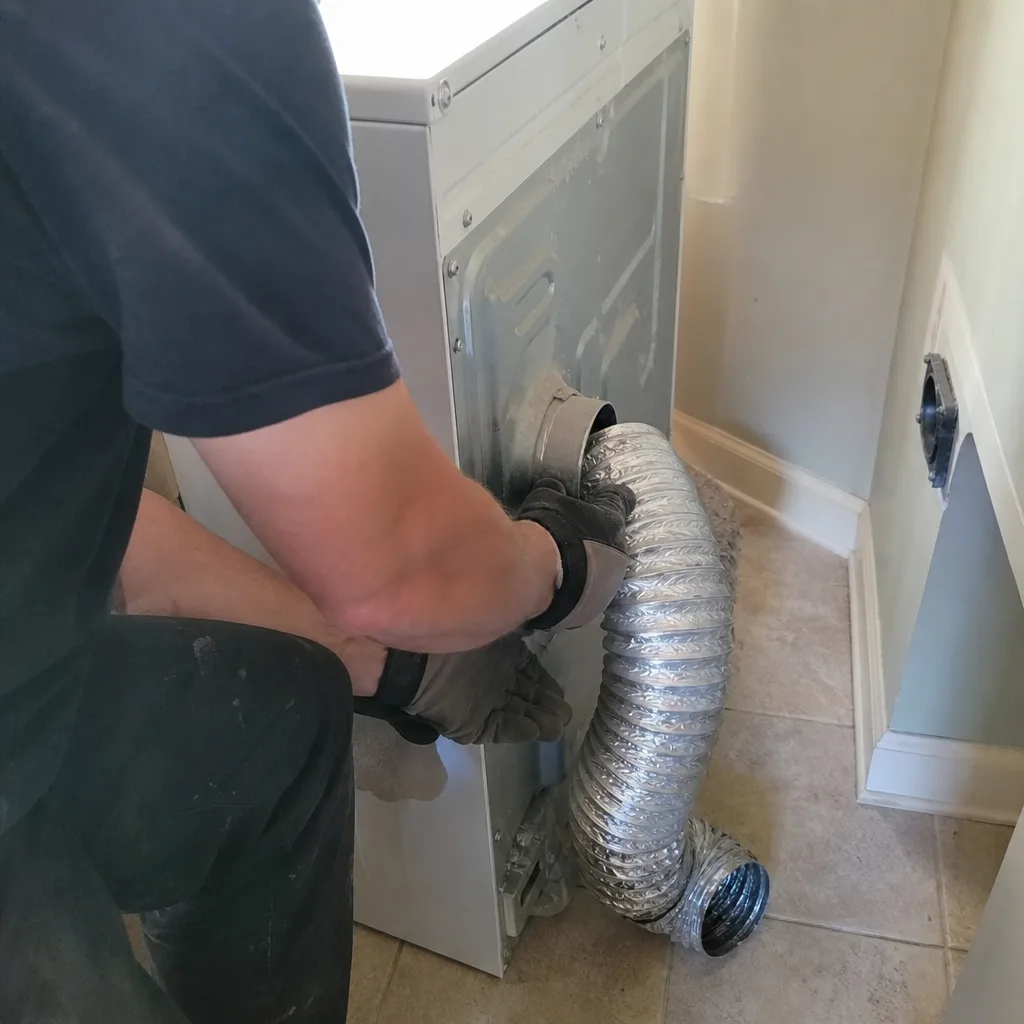
- Booking based on coupon price alone. The $79 or $99 whole-house special in Ashburn almost always converts to a much larger invoice on arrival. The coupon is a customer acquisition cost, not a real price for real work.
- Accepting “we’ll tell you the price after we look.” This structure removes your ability to compare quotes and creates pressure to accept an inflated price with a technician already in your home. Fixed written pricing exists; insist on it.
- Assuming “licensed and insured” means qualified. Virginia’s general business license requires no duct cleaning examination. Verify specific credentials separately from general business status.
- Neglecting to request before-and-after documentation. Without visual evidence of each duct run, you have no verification that work was performed throughout the system, not just at accessible registers.
- Hiring based on speed or availability. In Ashburn’s active market, same-day or next-day availability often indicates low demand, not operational efficiency. Quality contractors in this region typically book 3-7 days out.
- Failing to check equipment specificity. “Commercial-grade” and “high-powered” are meaningless descriptors. Real equipment has manufacturer names and model numbers you can verify.
- Ignoring the remedy clause. A written price and scope protect you before work starts. A written remedy policy protects you after it ends. Both are essential.
When to Call a Professional
Schedule a professional inspection if you notice visible dust emission from registers, inconsistent airflow between rooms, musty odors when the system cycles, or if your home was constructed during Ashburn’s 2000-2015 building boom and has never had ducts cleaned. After renovation work, particularly drywall or flooring projects, debris in ducts is nearly certain and should be addressed before it circulates continuously.
CleanRun Air Duct Cleaning Ashburn offers free estimates in Ashburn with fixed written pricing delivered before any work begins. Every estimate includes a clear scope naming the equipment we will use and the documentation you will receive. Call (240) 771-1508 to schedule.
Frequently Asked Questions
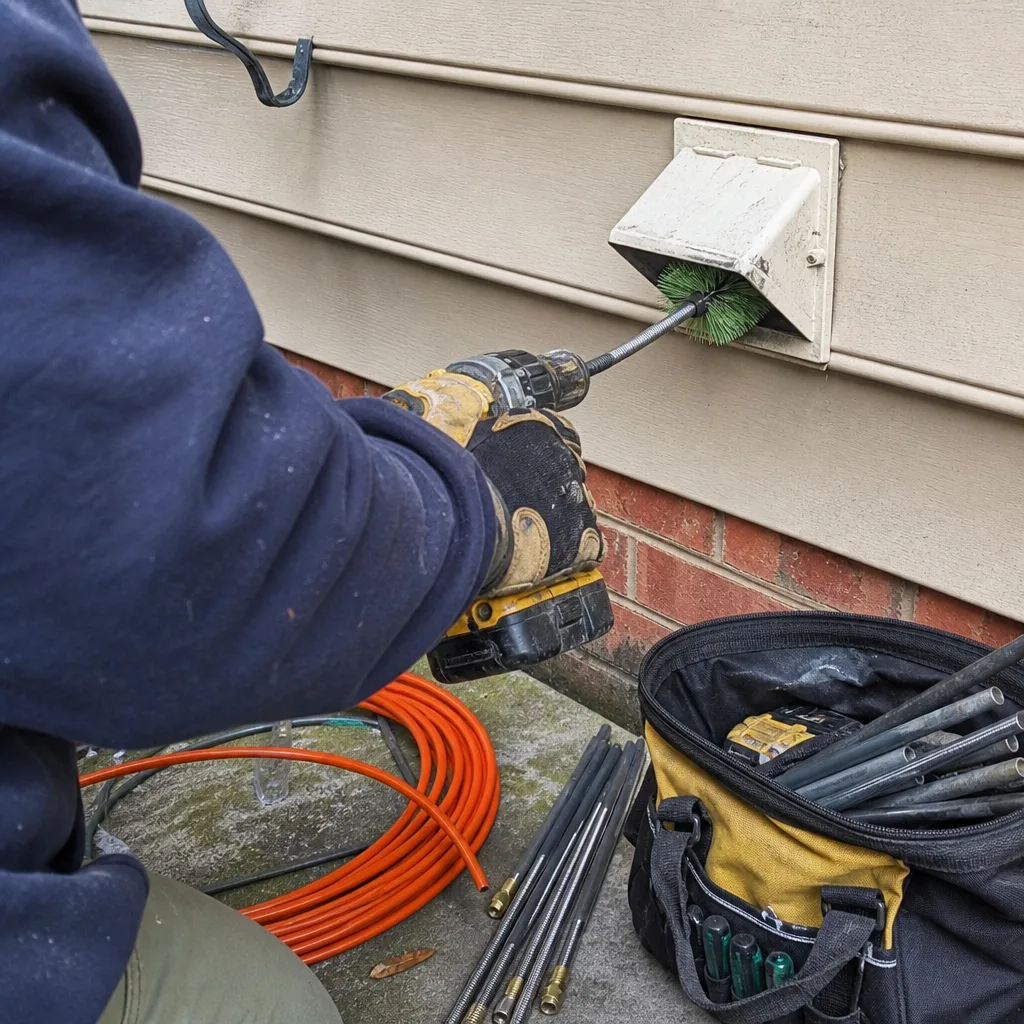
Whole-system air duct cleaning in Ashburn typically ranges from $400 to $800 for a standard single-system home, depending on square footage, duct run count, and whether the plenum and registers are included. Per-vent pricing structures often obscure true costs and encourage upselling. CleanRun provides one flat price per system agreed before work starts, with no per-vent add-ons. Call (240) 771-1508 for an exact quote - estimates are free.
The low quotes are typically loss-leader pricing designed to get a technician inside your home, where “required additional services” multiply the final invoice. A $79 or $99 whole-house price does not cover professional-grade negative-pressure extraction, HEPA containment, or documented photo records of each duct run. The difference between quotes often reflects whether you are paying for a documented cleaning or for vacuum noise and a sales pitch.
Request before-and-after photos of every duct run, not just a collection bag of debris. Debris could come from anywhere; photos timestamped to your job prove where cleaning occurred. At CleanRun, the Documented Photo Record on Every Visit shows the inside of every run, before and after, delivered as part of the standard job record. If a contractor cannot or will not provide this, you cannot verify the work.
NADCA recommends cleaning every 3 to 5 years for typical residential systems, with shorter intervals for homes with pets, allergy-sensitive occupants, or recent renovation. In Ashburn’s newer construction with tighter envelopes and near-constant HVAC operation, we often find significant debris accumulation at 3 to 4 years. The camera shows the actual condition; we do not recommend cleaning based on calendar alone.
NADCA certification means a company has met insurance requirements, employs at least one technician who passed the ASCS examination, and agrees to follow the ACR cleaning standard. It is not legally required in Virginia, but it is the only verifiable credential that binds the company to specific standards. Without it, you have no external recourse if work is substandard. We consider it essential for any contractor you consider.
Homeowners can replace filters and vacuum register surfaces, but internal duct cleaning requires negative-pressure extraction equipment and access tools that are not available for consumer rental. More importantly, duct systems in Ashburn homes often include flexible ductwork that tears easily under improper agitation, and HVAC components can be damaged by untrained contact. For the full system, professional service is the practical and safe choice.
The Bottom Line
Hiring an air duct cleaning contractor in Ashburn requires active verification because Virginia provides no licensing barrier to protect you. Request three documents before scheduling: NADCA membership verification, a written scope naming equipment by brand, and a fixed written price for the complete system. Disqualify contractors who offer post-inspection pricing, advertise teaser rates, or cannot specify their equipment. Verify Virginia business registration and insurance through SCC and DOLI portals. And insist on a written remedy clause that protects you after the work is done. The effort takes 30 minutes and prevents the far greater cost of inadequate cleaning, damaged ductwork, or a bait-and-switch invoice.
Written by Tomas Reyes, Owner at CleanRun Air Duct Cleaning Ashburn, serving Ashburn since 2013.