
Last updated September 22, 2026
Whole-system duct and dryer vent check with before-and-after photos - you see exactly what came out of your vents
That "$99 whole-house special" is a bait ad - the real number appears once they are in your hallway, or the "clean" is a shop-vac at the register. We photograph the inside of your ducts before and after instead.
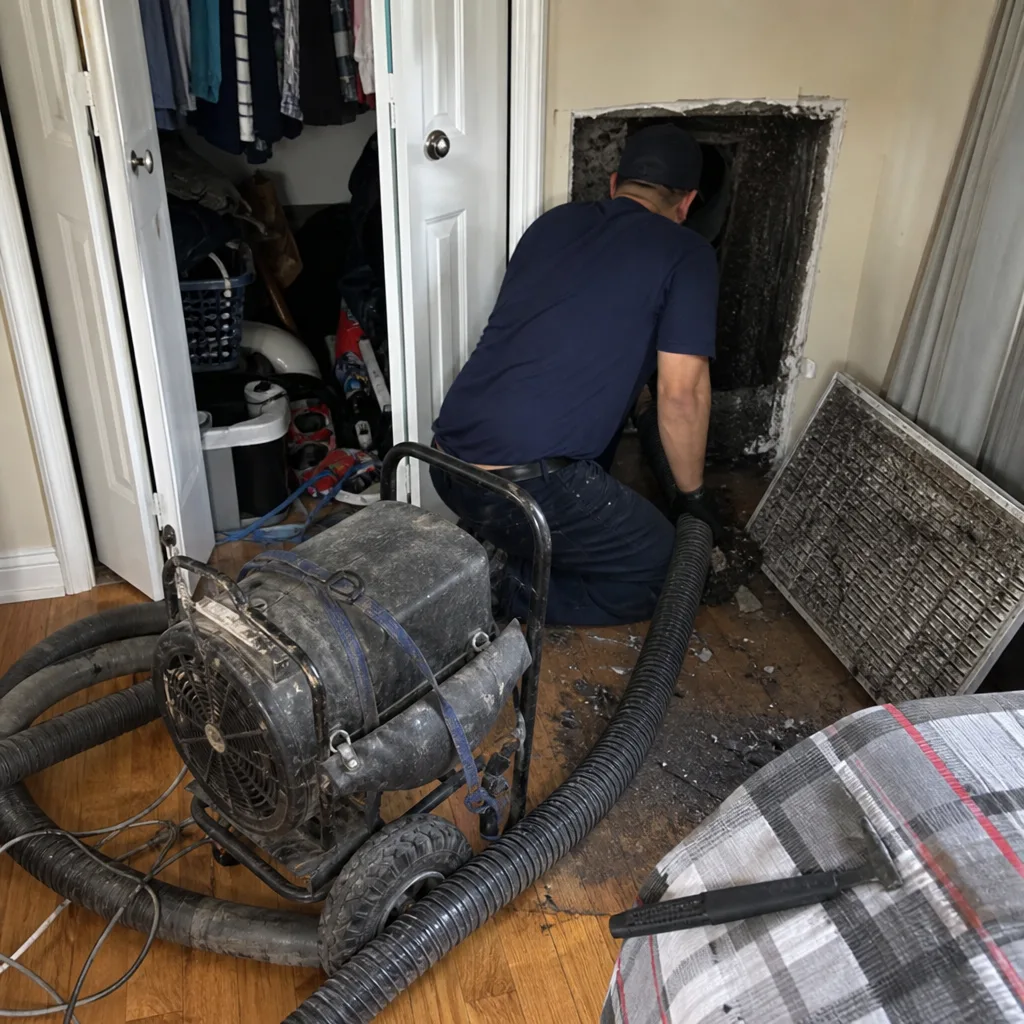 Before
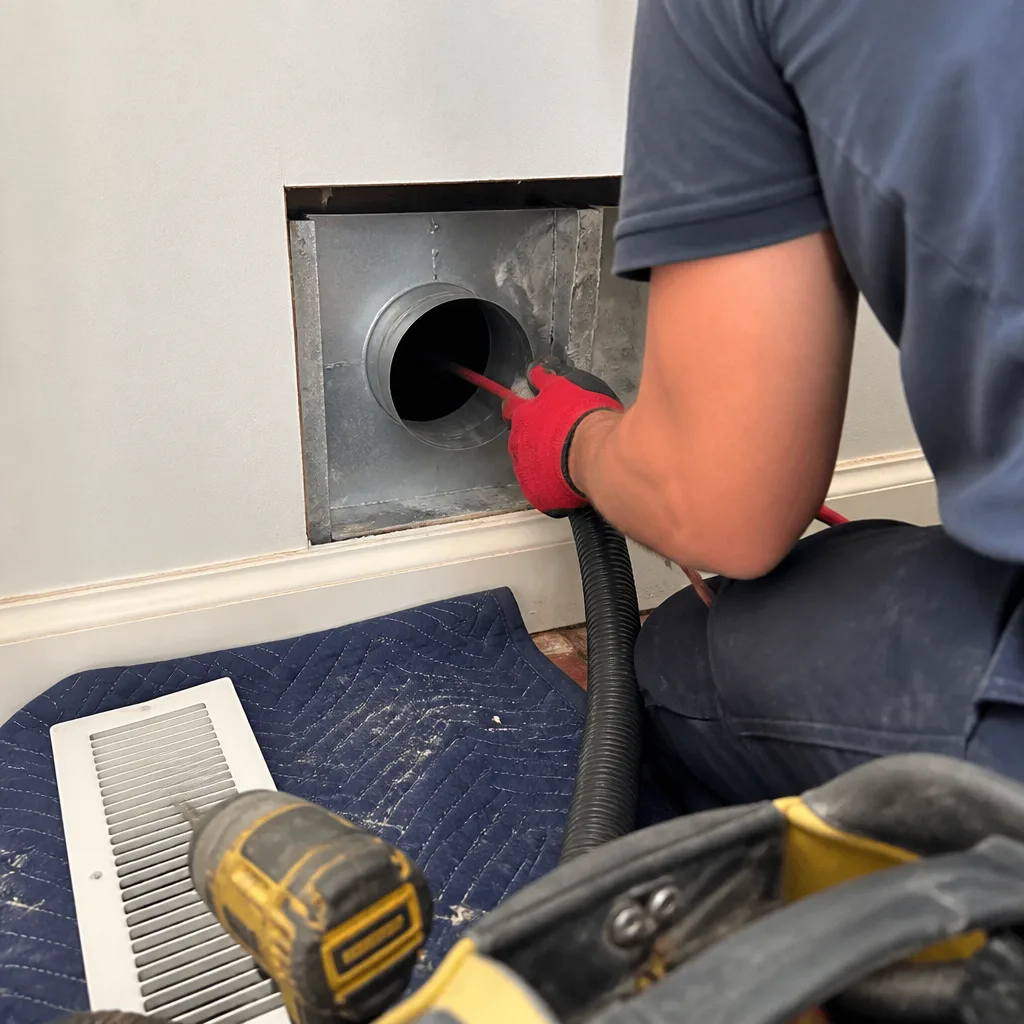 After
After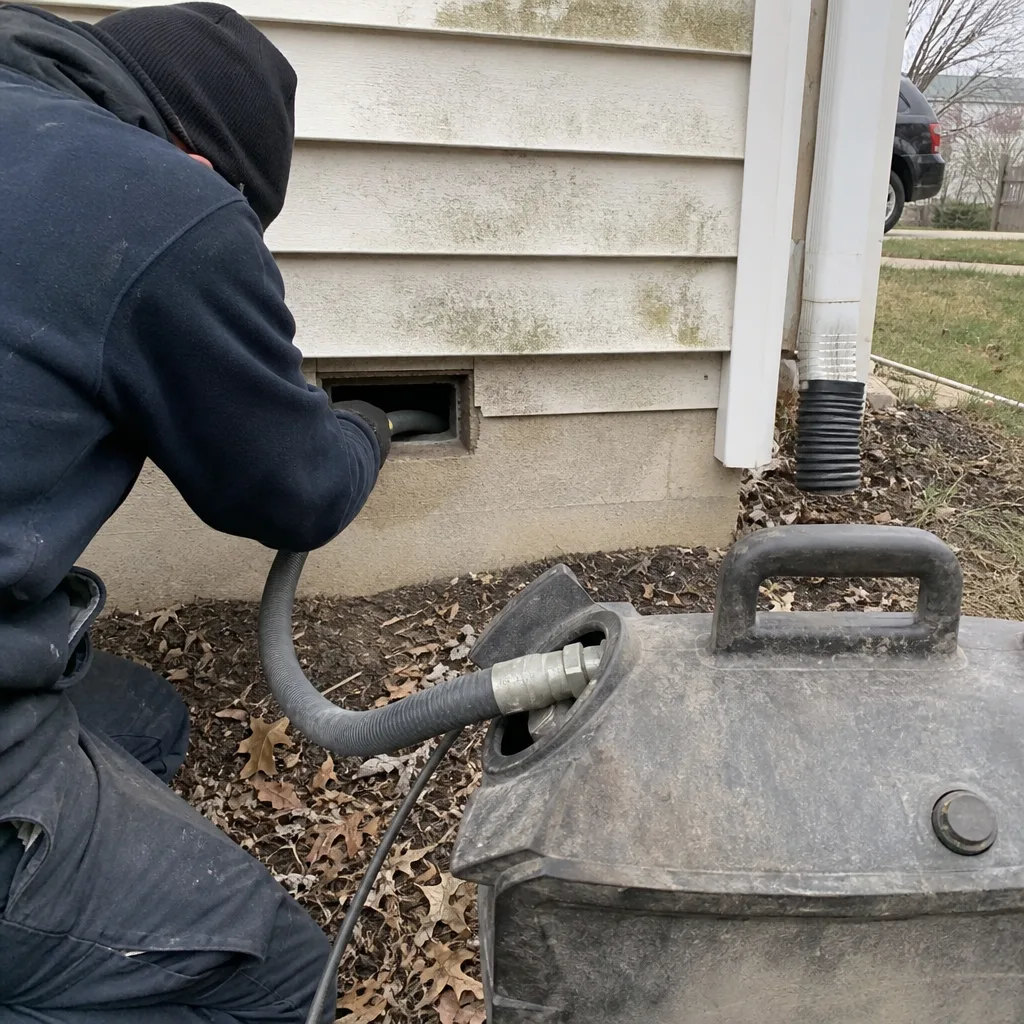 Before
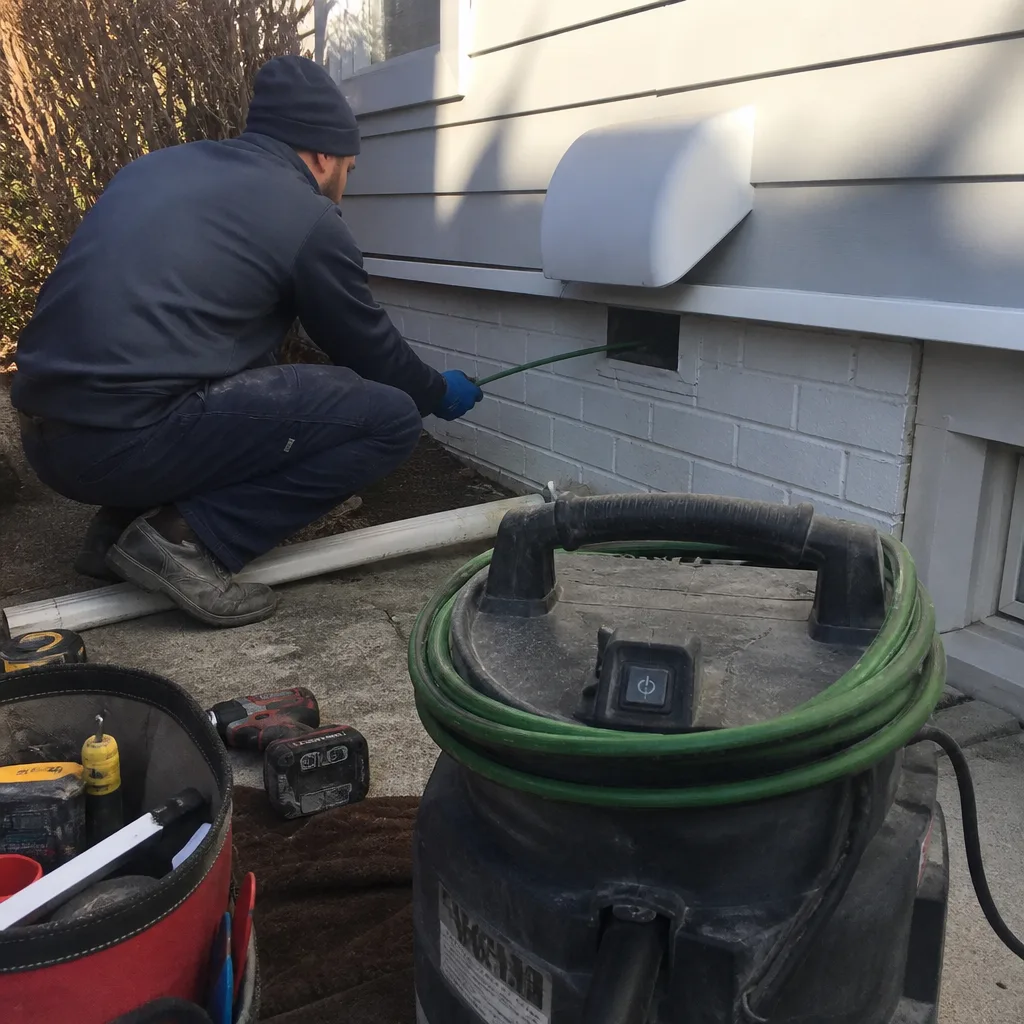 After
After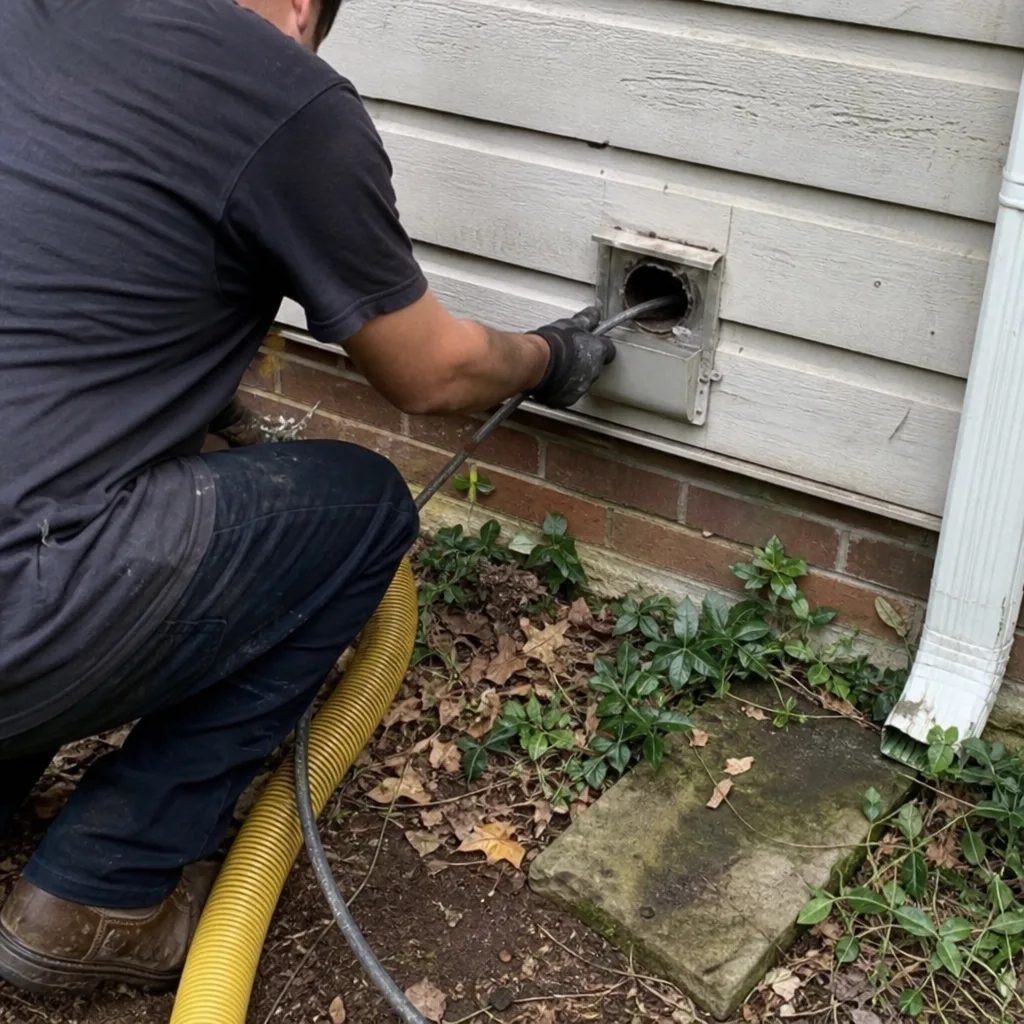 Before
 After
AfterDIY vs Professional Air Duct Cleaning: The Ashburn Homeowner’s Decision Guide
A $30 dryer-vent brush kit from a hardware store can legitimately clean register collars and the first two feet of straight duct. Calling that “DIY duct cleaning” and comparing it to professional negative-air extraction is a category error that most comparison guides never bother to clarify. In Ashburn, where the typical single-family home built between 2005 and 2018 has duct runs of 12 to 25 feet feeding second-floor bedrooms through finished basement chases, the equipment gap matters more than the effort gap. This guide shows exactly what consumer tools can reach, what they cannot, and how to decide based on where your contamination actually sits. For more guides & resources, explore our blog.
Quick Answer
DIY duct cleaning with consumer tools reaches 4-6 feet into a duct run and works for register grills, short straight dryer vents, and post-construction boot cleanup. Professional negative-air extraction using 2,000-4,000 CFM equipment reaches full duct runs, flex duct, and mold-contaminated systems. For most Ashburn homes with standard HVAC configurations, professional cleaning is the only method that addresses the full airway.
Table of Contents
- What Consumer Tools Actually Reach
- What Professional Equipment Does Differently
- Three Scenarios Where DIY Makes Sense
- Three Scenarios Where DIY Fails Regardless of Effort
- The Real Cost Comparison: Renting vs. Hiring in Ashburn
- How to Document Your Baseline Like a Professional
- Ashburn-Specific Factors: Climate, Construction, and Code
- Common Mistakes to Avoid
- When to Call a Professional
- Frequently Asked Questions
- The Bottom Line
BeforeAfterWhat Consumer Tools Actually Reach
Consumer duct cleaning tools fall into three categories, and each has a hard physical limit that manufacturers rarely advertise in large print.
Register brushes and vacuums. These are the $15-$40 kits with flexible rods, nylon brushes, and a drill attachment. The brush head is typically 2.5 to 4 inches in diameter, designed to fit standard residential ductwork of 6 inches or larger. The rods extend 6 to 12 feet in theory. In practice, once the brush passes the boot (the angled transition piece behind your wall or floor register), it encounters the first elbow or tee within 2 to 4 feet in most Ashburn homes. The brush binds at the elbow. The homeowner either extracts it or forces it and risks detaching the brush head inside the duct. We’ve retrieved brush heads from duct runs in Ashburn’s Brambleton and Loudoun Valley Estates neighborhoods where the homeowner’s kit reached 5 feet, bound at a 90-degree turn, and separated.
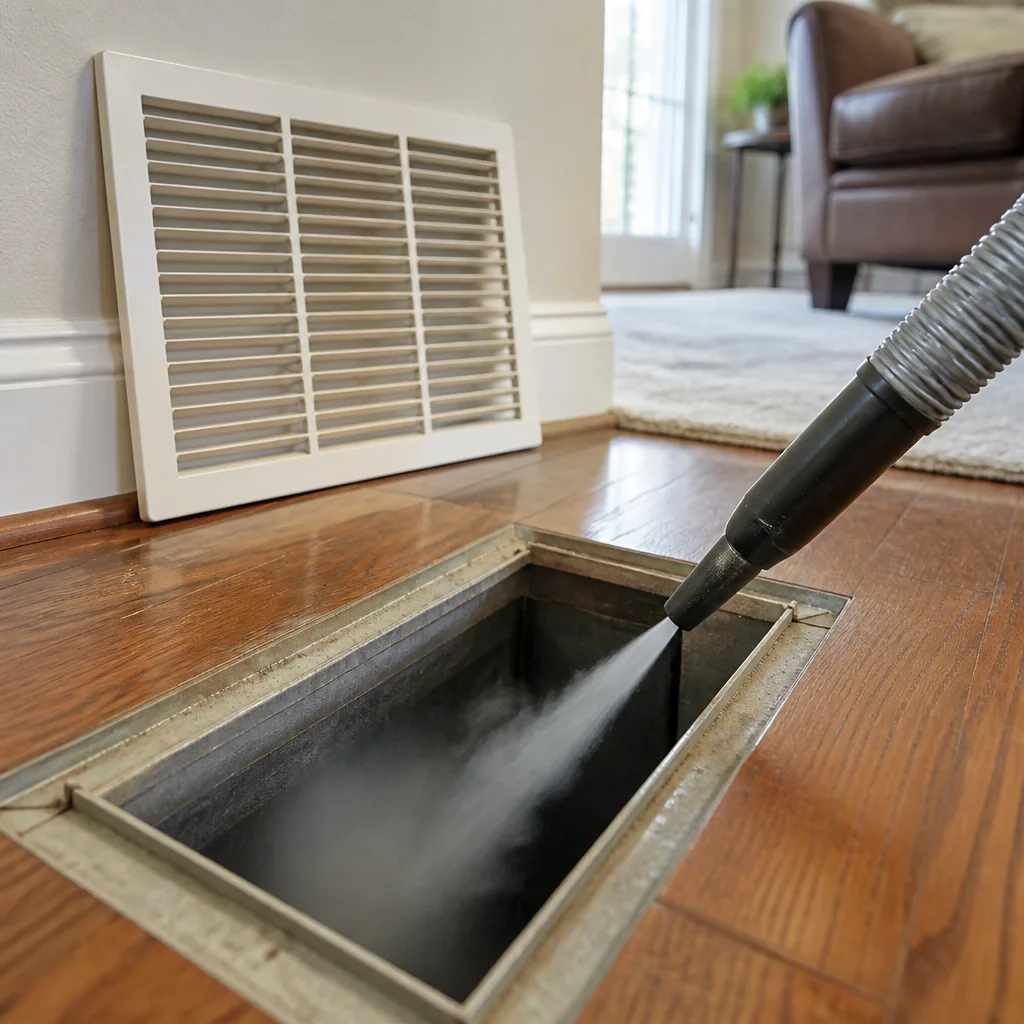
Shop-vac with brush attachment. A standard 6.5 HP shop vacuum generates approximately 60-80 inches of water lift at the hose end. This is sufficient to pull loose dust from a register boot or collect debris dislodged by a manual brush. It is not sufficient to overcome the static pressure of a long duct run or to maintain airflow past a few feet of friction. The hose itself, typically 2.5 inches in diameter, creates a seal against the duct wall that reduces effective suction depth. We’ve tested this: a shop-vac brush attachment loses meaningful debris extraction beyond 4 feet in a 6-inch round duct.
HEPA vacuums with long wands. These are the most capable consumer option, often marketed for post-construction cleanup. The sealed HEPA filtration is genuine and useful for allergen containment. The wand reach, however, is limited by the same geometry: straight sections only, no ability to navigate elbows or transitions. The wand also cannot agitate adhered debris. Dust that has settled and compacted over years of HVAC cycling, especially in Ashburn’s pollen-heavy spring seasons, requires mechanical agitation to dislodge before vacuum extraction.
The honest ceiling for consumer tools: 4-6 feet of reach in ideal conditions, straight duct only, with no assurance that dislodged debris is captured rather than pushed deeper.
What Professional Equipment Does Differently
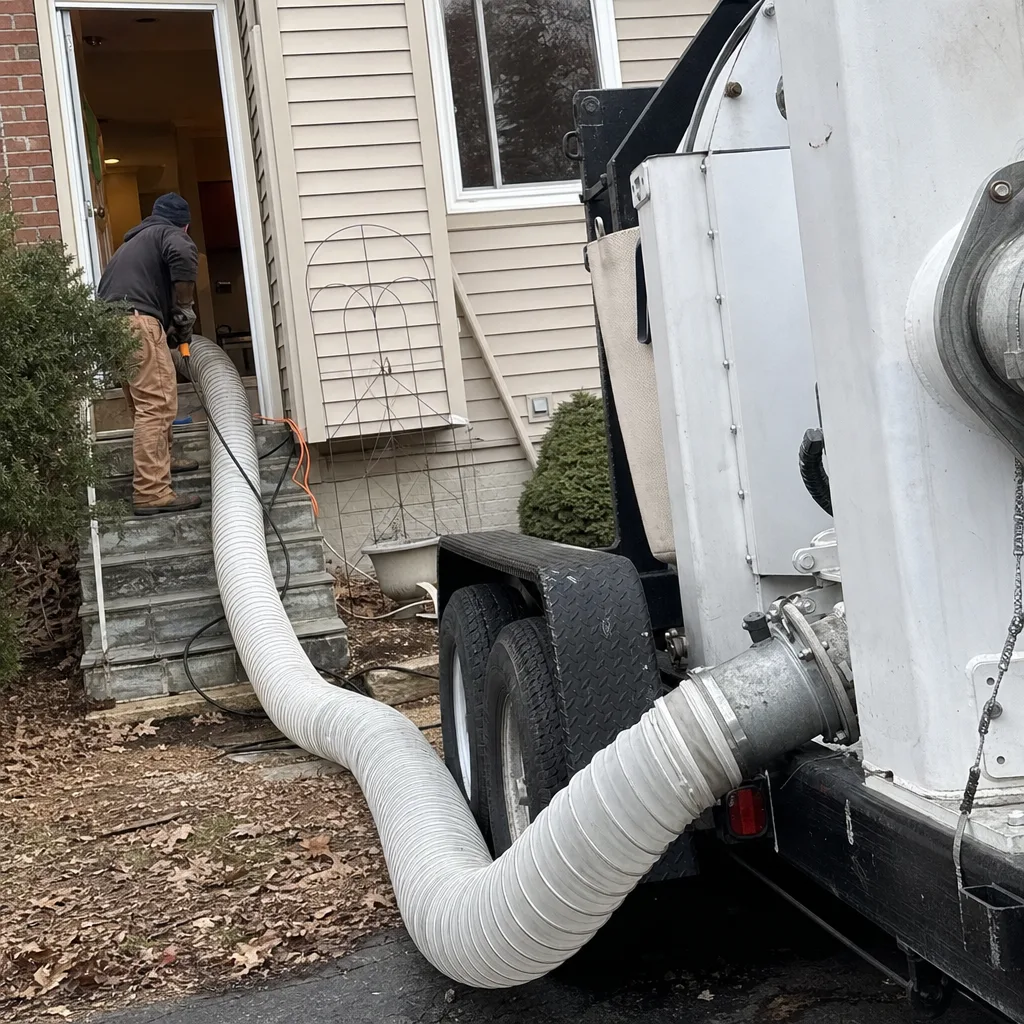
Professional duct cleaning operates on negative-pressure containment, not reach-by-extension. The equipment creates a pressure differential that moves the entire airstream, not just a localized suction point.
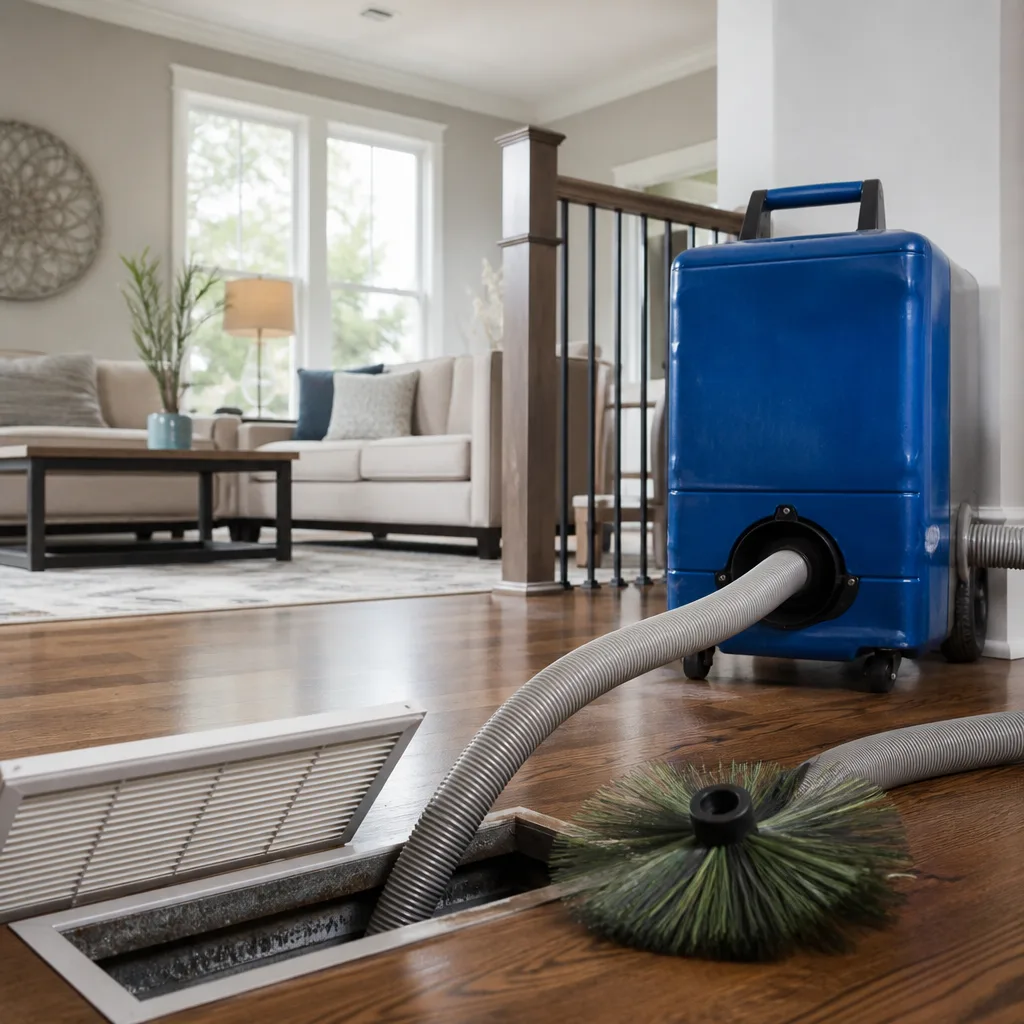
Negative air machines. These are the large wheeled units you see professional crews roll to the truck. A unit from Abatement Technologies or Nikro generates 2,000-4,000 cubic feet per minute (CFM) of airflow while maintaining a negative pressure of 0.02 to 0.05 inches of water column throughout the duct system. This means every register in the home becomes an extraction point simultaneously. The machine is connected to the main trunk line, typically at the plenum (the large distribution box on top of your furnace), so the suction pulls from the far ends of every branch duct toward the center. A 25-foot duct run in an Ashburn colonial is under continuous negative pressure for the duration of cleaning, with no brush required to travel the full distance.
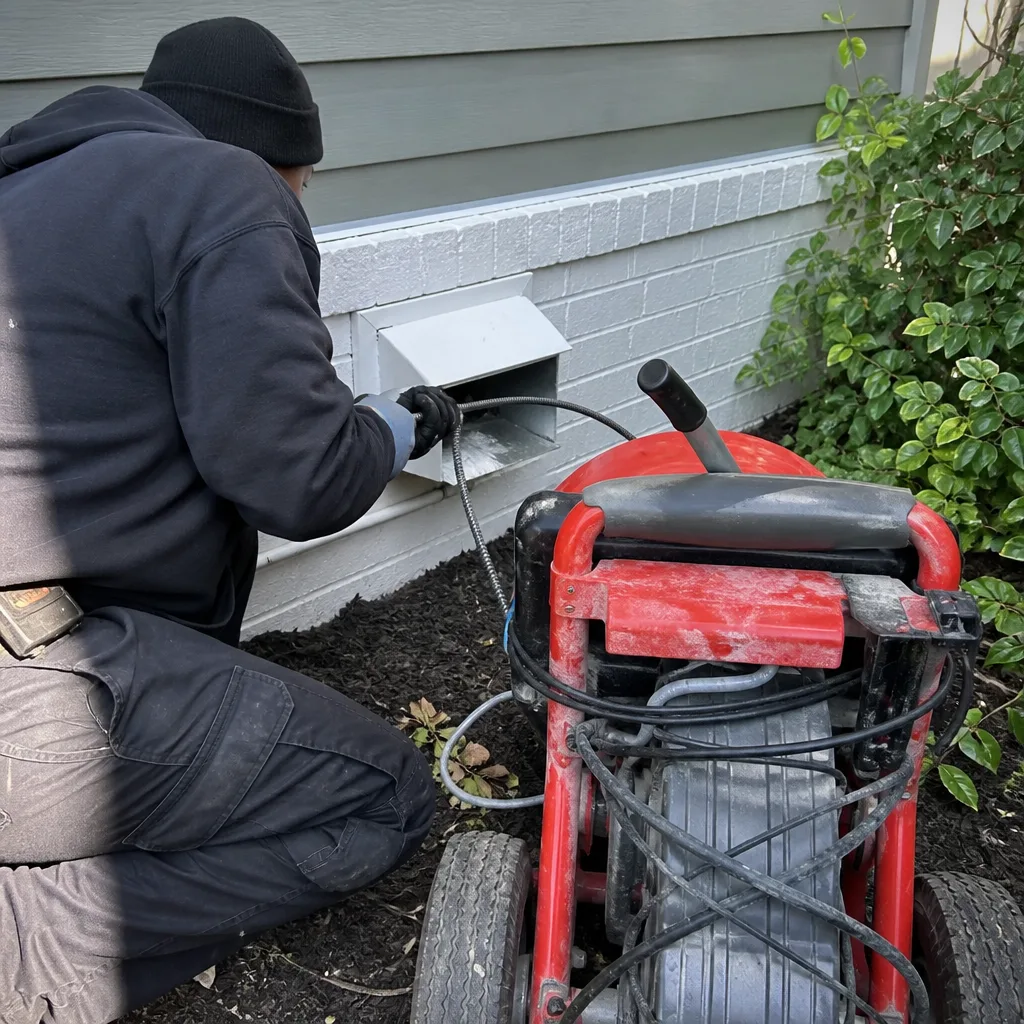
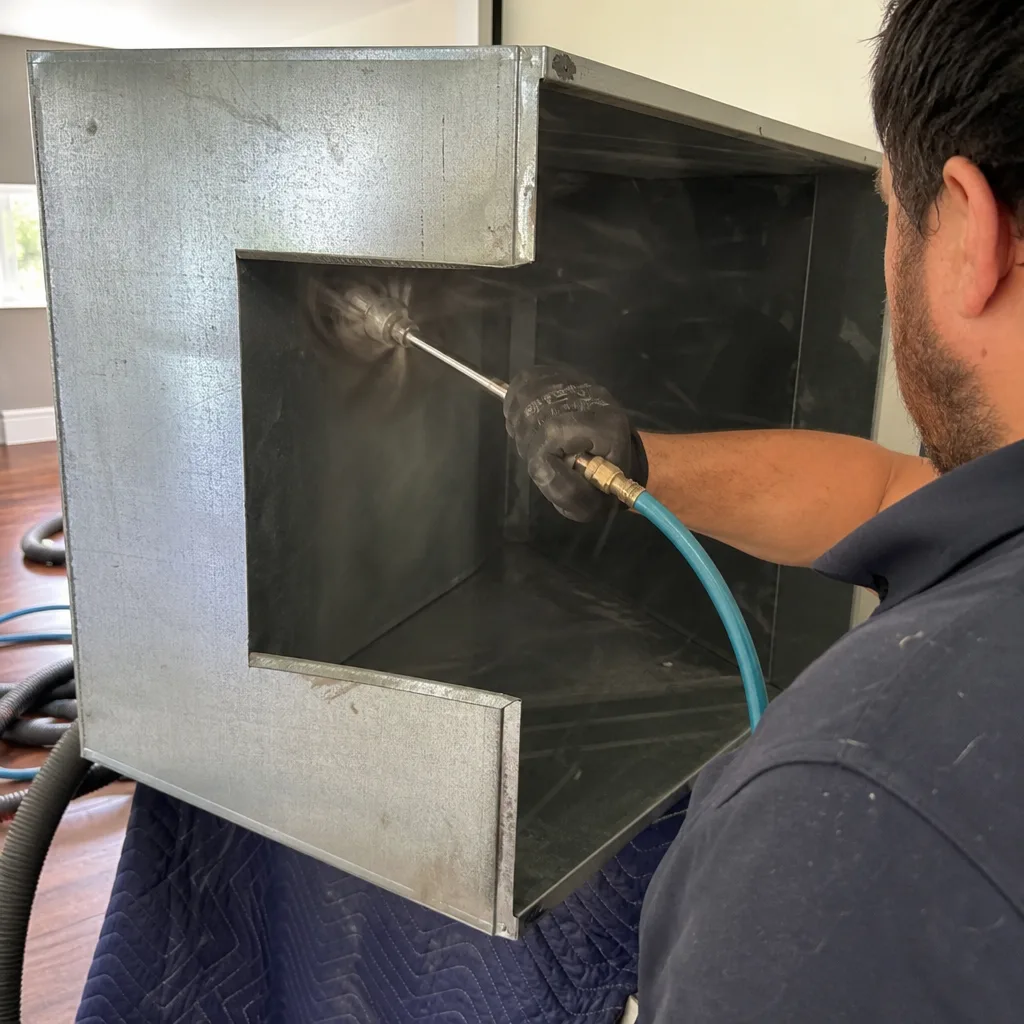
Rotary contact vacuums and pneumatic whips. These are the agitation tools that travel through the ductwork. A rotary brush system, such as those manufactured by Rotobrush, uses a spinning brush head on a flexible cable that can navigate multiple elbows while the vacuum collar at the entry point captures dislodged debris immediately. Pneumatic whips use compressed air to strike the duct interior, breaking adhered material loose for the negative airflow to carry away. The critical difference: agitation and extraction happen at the same point, so debris is not pushed deeper.
Containment and filtration. Professional equipment exhausts through HEPA filtration rated at 99.97% efficiency at 0.3 microns. The negative-pressure setup means that if a duct joint is loose or a register seal fails, air flows into the system rather than contaminated air escaping into the home. This matters in Ashburn’s tighter-built homes from the 2010s, where envelope sealing for energy efficiency can trap particulates indoors if they are released during cleaning.
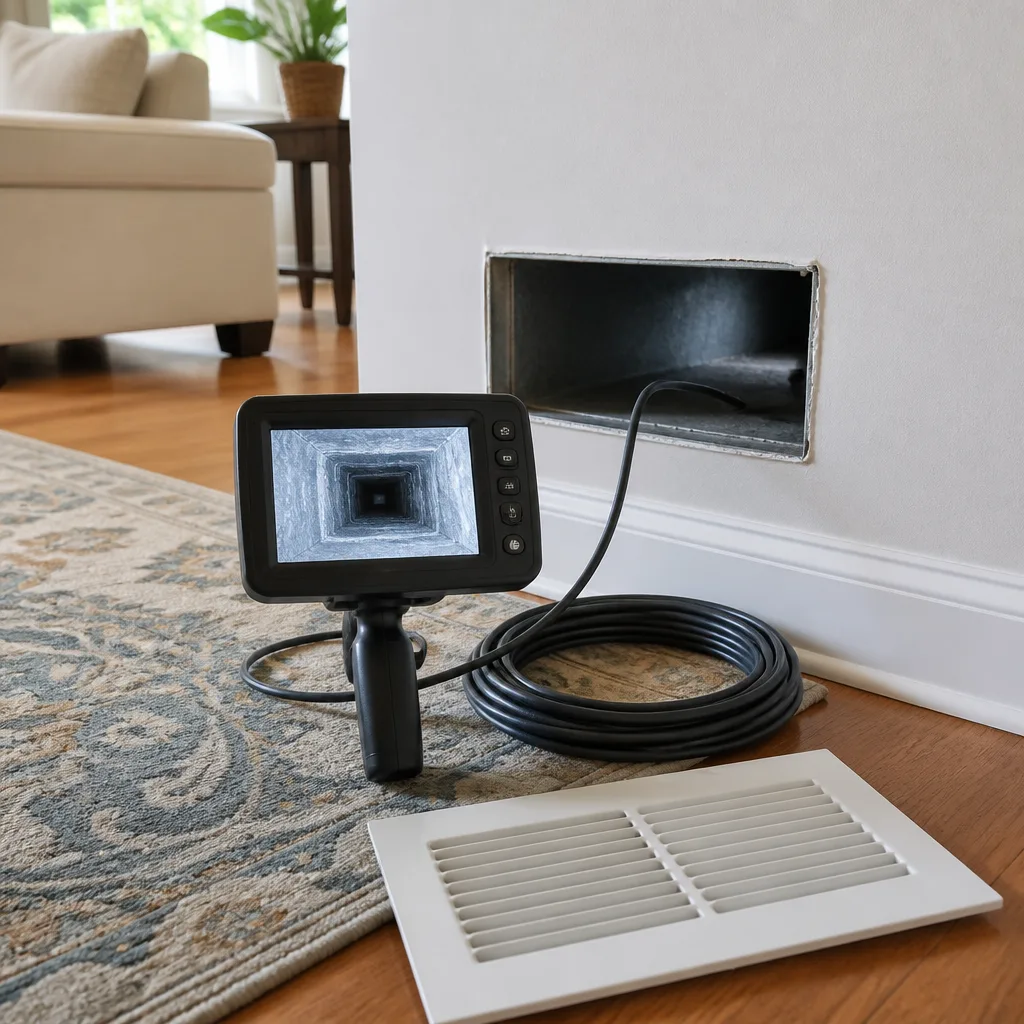
Documentation capability. Professional-grade inspection cameras, often integrated with the cleaning system, travel the full duct length and record video or still images. At CleanRun, this documentation is standard: every duct run, before and after, delivered to the customer as part of the job record. Consumer tools have no equivalent. You cannot photograph what you cannot reach.
Three Scenarios Where DIY Makes Sense
There are legitimate, cost-effective applications for homeowner effort. The key is matching the tool to the actual problem location.
- Cleaning register grills and visible boot interiors. The register itself, the faceplate, and the first 6-12 inches of the boot behind it are accessible, visible, and cleanable with basic tools. Remove the register, vacuum the grill with a brush attachment, wipe the boot interior with a damp microfiber cloth, and replace. This addresses the dust that recirculates most visibly and improves immediate appearance. In Ashburn, where many homes have floor registers that collect pet hair and tracked debris, this is worth doing quarterly.
- Post-construction boot cleanup after remodeling. If you’ve had drywall work, flooring replacement, or painting in a room, the register boot often collects loose material that fell through the opening during construction. A shop-vac with a narrow nozzle can remove this before it migrates deeper. Do this before running the HVAC system post-construction. The deeper ductwork, if properly sealed during construction, should not require cleaning.
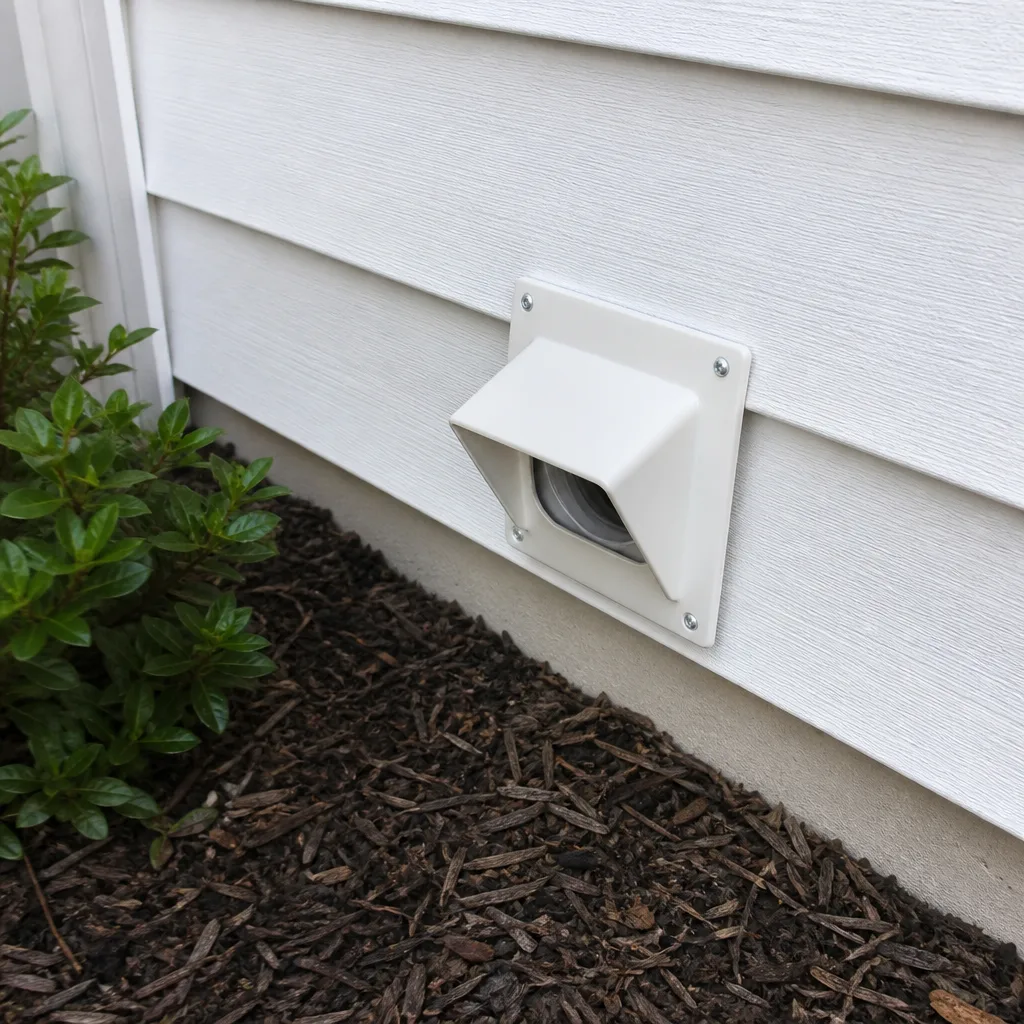
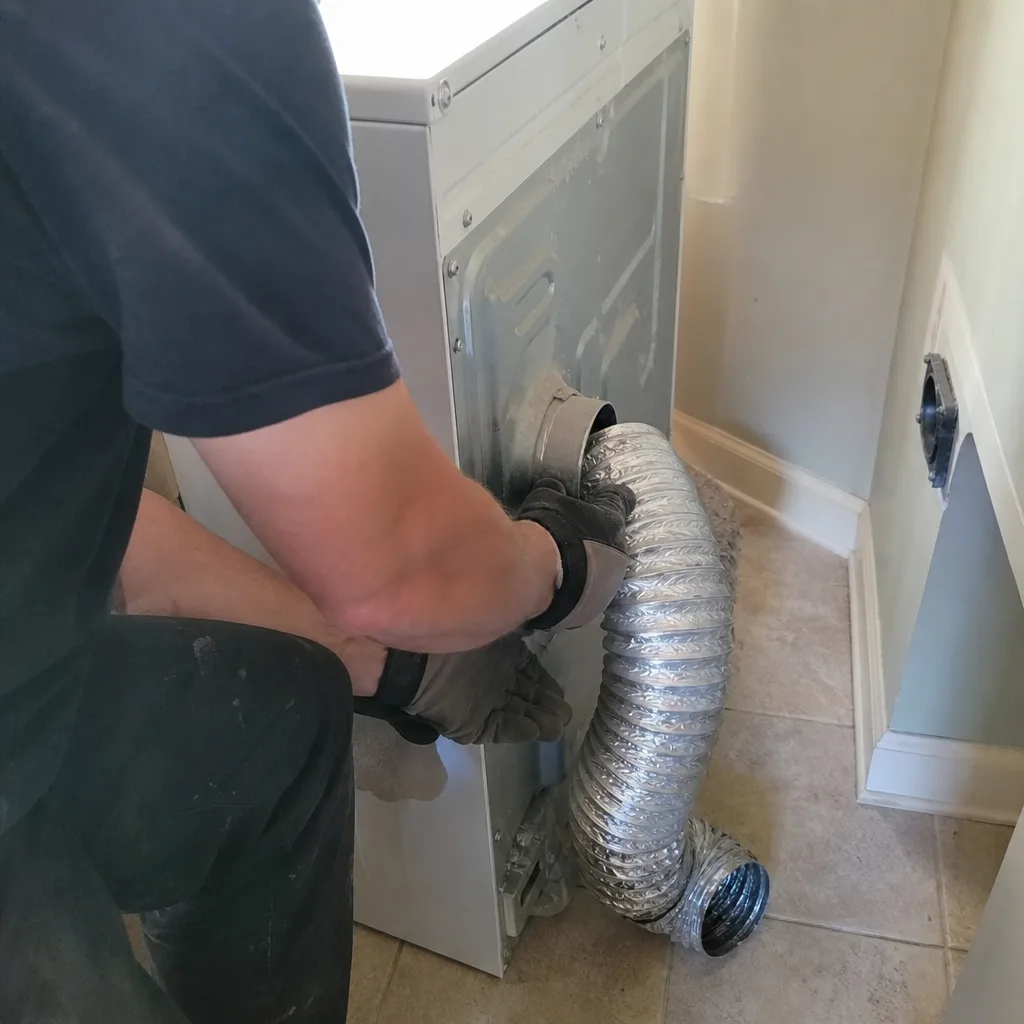
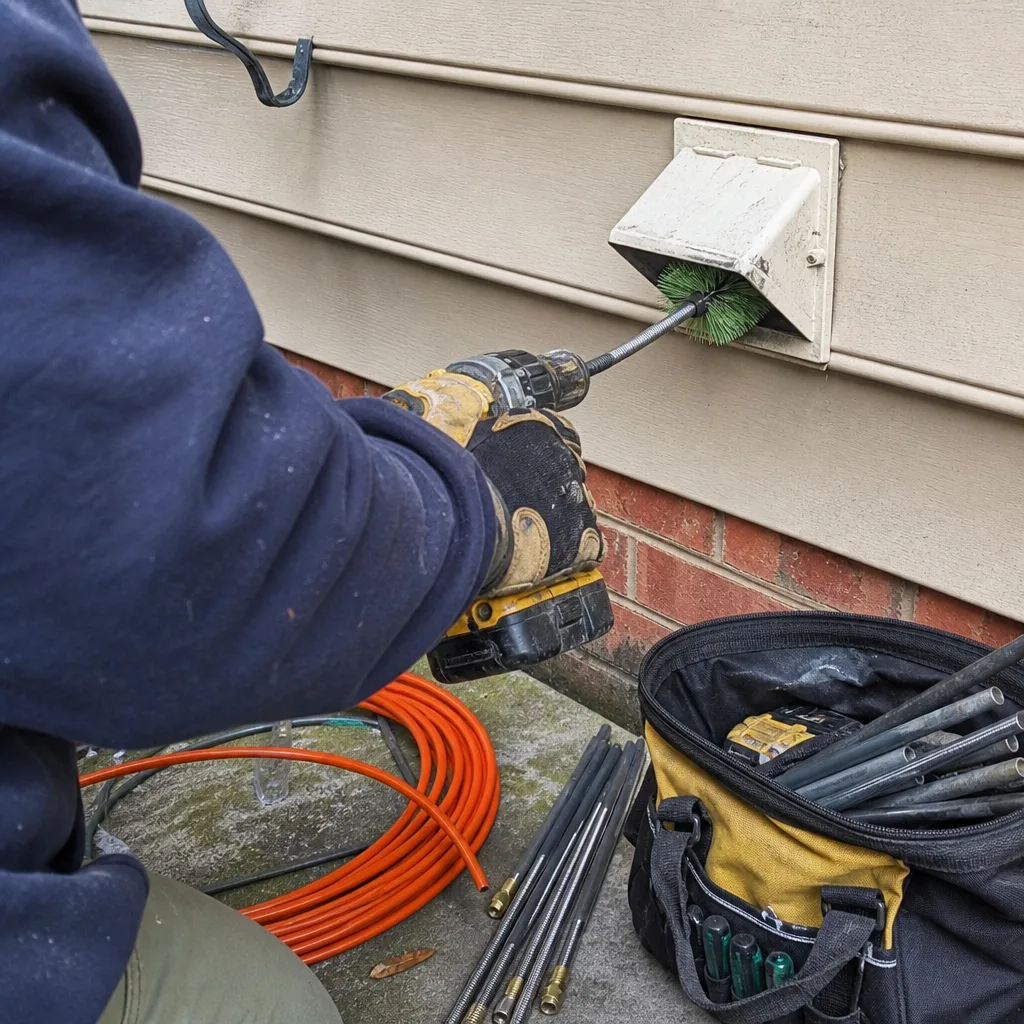
- Dryer vent cleaning on a short, straight run. A dryer vent that exits through an exterior wall within 6 feet of the dryer, with no elbows, can often be cleaned effectively with a $25 brush kit. This is not duct cleaning in the HVAC sense, but it is a related maintenance task that homeowners can handle. For longer runs, especially those routing through an Ashburn basement ceiling or second-story wall before exiting, the same reach limitations apply. Dryer Vent Cleaning in Ashburn covers when professional equipment becomes necessary for fire-safety compliance.
The common thread: DIY works when the contamination is visible, reachable, and localized. It does not work when the problem extends beyond arm’s reach or around a bend.
Three Scenarios Where DIY Fails Regardless of Effort
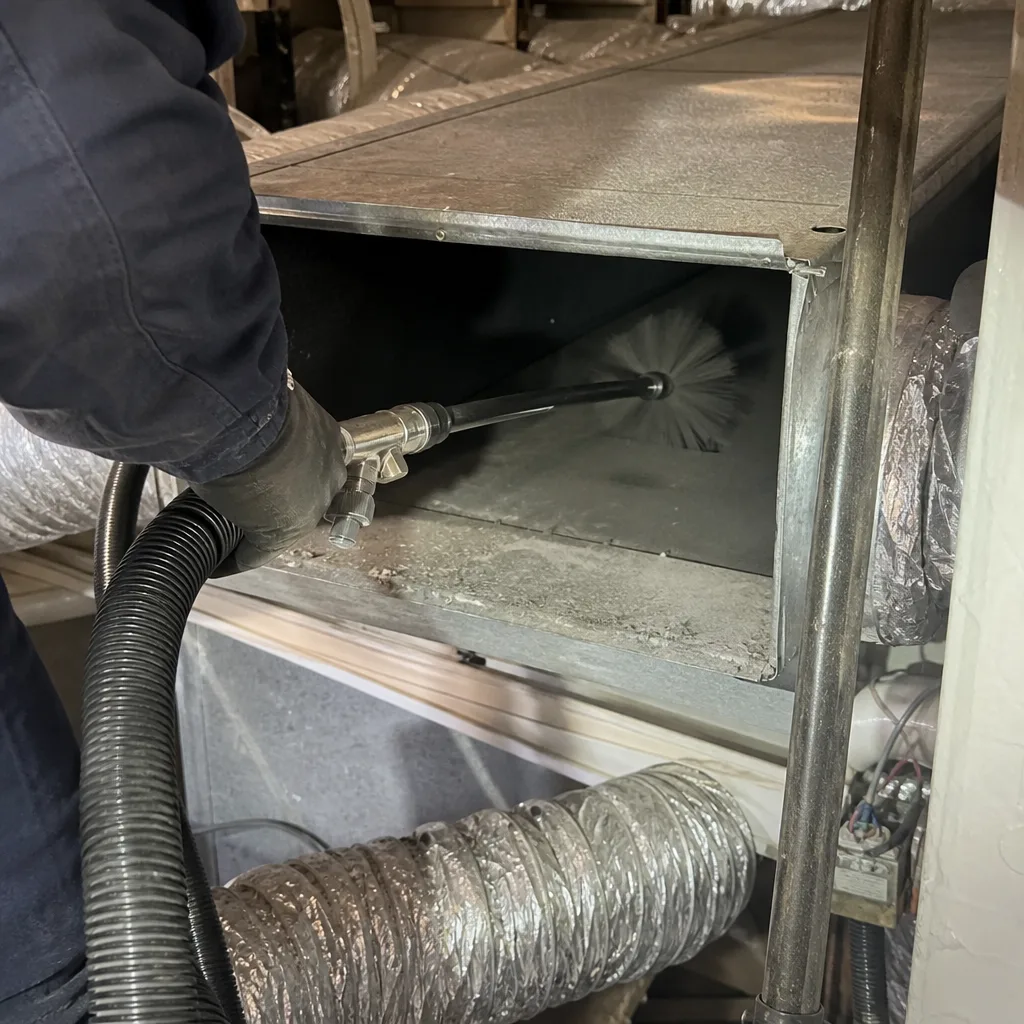
Some duct configurations defeat consumer tools on physical principles. More effort, more expensive brushes, or more time do not overcome these limits.
- Duct runs longer than 8 feet with one or more elbows. The geometry is simple: a flexible rod stores energy in tension and compression. At each elbow, the rod binds and transfers torque to the duct wall rather than rotation to the brush head. Beyond two elbows, manual feeding becomes impossible. In Ashburn’s Ashburn Village and One Loudoun developments, typical second-floor bedroom runs are 15-25 feet with two to three elbows routing through finished basement soffits. No consumer brush kit navigates this.
- Any flex duct system. Flex duct, the corrugated plastic-sleeve ductwork common in attic installations and some basement retrofits, has an internal liner that snags on brush bristles. A rotary brush in flex duct will tear the liner, detach it from the wire coil, or create a hole that leaks conditioned air into unconditioned space. We’ve replaced flex duct in Ashburn homes where a homeowner’s brush kit shredded the interior. The repair cost exceeded professional cleaning would have. Flex duct requires negative-pressure cleaning with non-contact agitation, or replacement if damaged.
- Any suspected mold contamination. Mold in ductwork requires containment before agitation. Disturbing mold colonies without negative-pressure containment and HEPA exhaust releases spores into the living space at concentrations that can trigger respiratory response. This is not a theoretical risk. In Ashburn’s humid summer months, we’ve found mold in duct runs where homeowners reported “a musty smell that comes on when the AC runs.” The correct response is professional assessment with containment, not DIY brushing that aerosolizes the contamination. Air Duct Cleaning in Ashburn includes protocols for verified mold cases.
The Real Cost Comparison: Renting vs. Hiring in Ashburn
The cost argument for DIY often ignores equipment rental realities and time cost. Here is the actual math for a typical 2,000-square-foot Ashburn home with 12-16 registers and a basement-located HVAC system.
Consumer purchase route: A mid-grade brush kit ($35), shop-vac with HEPA filter upgrade ($180-$250), and extension rods ($25) totals $240-$310. This equipment reaches 4-6 feet per run and cannot navigate elbows. It cleans register areas only. Amortized over multiple years, the cost per foot of actual duct cleaned is high because most of the ductwork remains untouched.
Professional equipment rental route: Negative-air machines and rotary brush systems are not available at standard home improvement rental centers in Northern Virginia. The few specialty suppliers that rent to contractors require proof of NADCA membership or equivalent certification, liability insurance, and often a multi-day minimum. Daily rates for portable negative-air units run $200-$350; rotary brush systems add $150-$250 per day. A competent DIY attempt on a full system requires one full day minimum, more likely two for a first-timer. Total rental cost: $500-$900, plus transportation, plus the learning curve of operating equipment designed for trained technicians.
Professional service in Ashburn: CleanRun’s whole-system cleaning, with negative-air extraction, rotary agitation, and documented photo record, is priced as a flat rate per system, not per vent. Haven Standard Clause 1 requires the written price before any work starts. For a typical Ashburn home, this falls in the $400-$700 range depending on system size and accessibility. The job takes 3-4 hours. The customer receives before-and-after photos of every duct run and a 365-Day Done Right Promise in writing.
The time cost of DIY deserves explicit mention. A homeowner attempting thorough cleaning with inadequate tools spends 6-10 hours on a task that achieves partial results. The same time applied to professional engagement yields complete results with documentation. For homeowners in Ashburn’s professional demographic, time cost often exceeds the service price differential.
How to Document Your Baseline Like a Professional
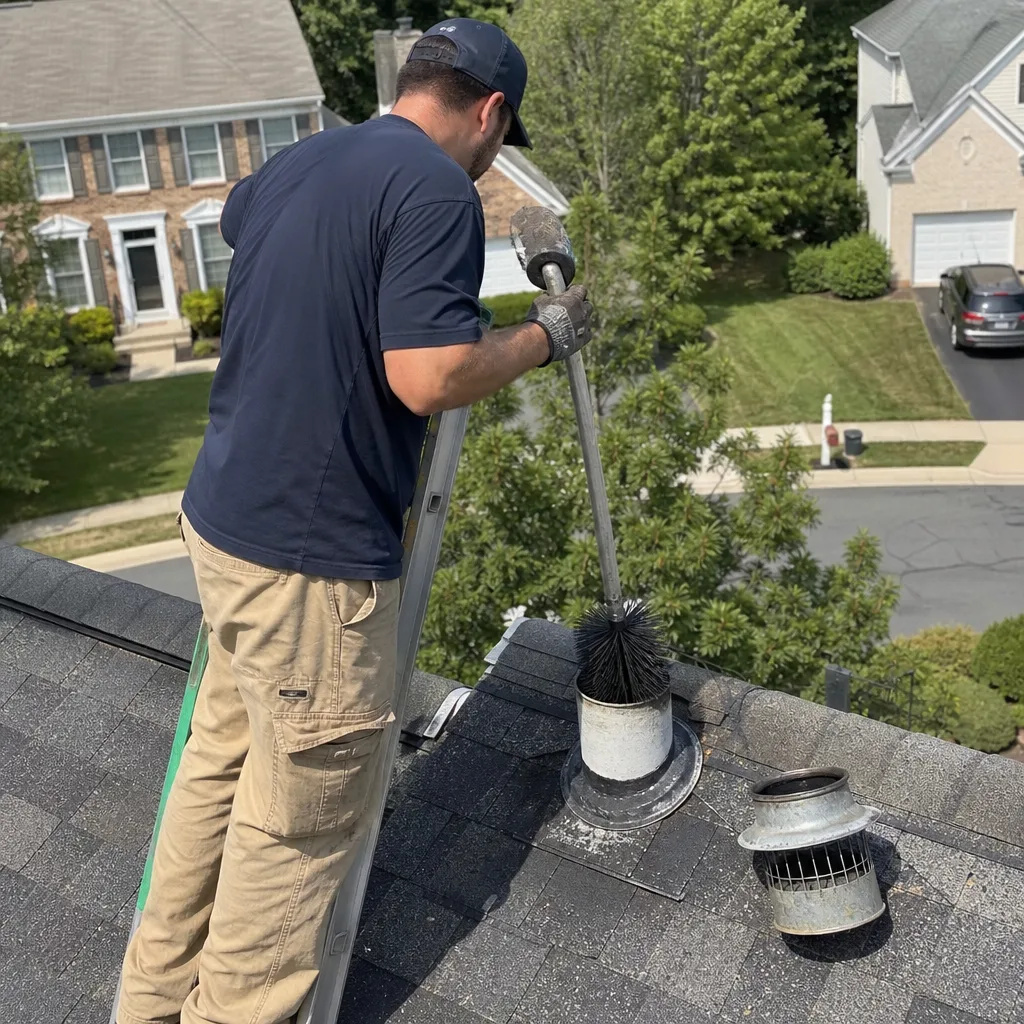
Whether you attempt DIY cleaning or hire a professional, documentation is the only way to verify results. Professional crews establish a photo baseline as standard practice. Homeowners should do the same before any DIY attempt.
- Photograph every register and the visible boot interior before touching anything. Use your phone’s flash. Capture the depth you can see. Note the date and room location.
- Run the HVAC system for 10 minutes, then hold a white paper towel over a register. This shows the particulate load being delivered to the room. Photograph the result.
- If you have a borescope or inspection camera, feed it into the duct to the point of obstruction. Photograph what you see at maximum reach. This is your “after” comparison target.
- After your DIY cleaning, repeat all three steps. Compare. If the paper towel test shows no improvement, or if the borescope shows unchanged conditions beyond your reach, you have objective evidence that DIY methods were insufficient.
- Keep this documentation if you later hire a professional. It establishes the pre-existing condition and helps verify that the professional’s “after” photos represent genuine improvement, not selective framing.
At CleanRun, the Documented Photo Record on Every Visit includes every duct run, before and after, delivered as part of the standard job record. This practice has been in place since our first job in 2013. Homeowners who attempt DIY first and then hire us often mention that their own documentation helped them recognize the gap between surface cleaning and full-system cleaning.
Ashburn-Specific Factors: Climate, Construction, and Code
Ashburn’s environment and building stock create conditions that affect the DIY vs. professional calculation.
Pollen load and seasonal cycling. Loudoun County’s tree pollen counts regularly exceed 2,000 grains per cubic meter in peak spring season, among the highest in the mid-Atlantic. This pollen enters homes through natural ventilation, settles in ductwork during shoulder seasons when HVAC runs intermittently, and resuspends when the system cycles on. Compacted pollen requires mechanical agitation beyond what a shop-vac brush can provide. We’ve photographed 1/4-inch accumulation at duct elbows in Ashburn homes where the homeowners reported “we change filters regularly.” The filters catch what passes through them; they do not retroactively clean what has already settled.
Construction-era duct practices. Homes built in Ashburn’s 2000-2010 expansion often used flex duct in attic spaces to reduce installation cost. These systems are now 15-25 years old, with liners that have become brittle. DIY brushing in these systems carries higher damage risk than in newer construction. Homes from the 2015-2020 period more commonly use rigid duct with mastic-sealed joints, which withstands professional agitation but still binds consumer brush kits at elbows.
Basement humidity and mold risk. Ashburn’s summer dew points regularly reach 70°F, and basement relative humidity can exceed 60% without dehumidification. Ductwork in basement soffits runs through this humid zone. Any organic debris in the ductwork, combined with summer condensation on cool duct surfaces, creates conditions for mold growth. We’ve found mold in basement trunk lines in Ashburn’s Farmwell Hunt and Ashburn Farm neighborhoods where the homeowner assumed “concrete basements don’t have moisture issues.” The concrete is porous; the ductwork is not.
Local permit and code context. Virginia’s Uniform Statewide Building Code does not require permits for duct cleaning as a maintenance activity. However, if DIY cleaning damages ductwork and requires repair or replacement, that work may trigger permit requirements depending on scope. Professional work by a licensed contractor carries permit compliance as part of the service. CleanRun technicians are background-checked, uniformed, and identified by name before arrival, operating under Haven Standard Clause 3: Verified Crews.
Common Mistakes to Avoid
- Assuming register cleaning equals duct cleaning. Clean registers improve appearance and reduce immediate dust recirculation. They do not address the 90%+ of duct surface area that lies beyond visual range. We’ve had Ashburn homeowners tell us “we clean our registers every month” as evidence that professional cleaning is unnecessary. The camera shows otherwise.
- Using a shop-vac without HEPA filtration. Standard shop-vacs exhaust fine particulates through the motor cooling port. You are not removing allergens; you are redistributing them at higher velocity. True HEPA shop-vacs cost $200+ and require filter replacement. Budget vacuums with “HEPA-type” filters are not sealed systems and leak at gasket points.
- Forcing a brush past an elbow. The brush head separates, remains in the duct, and becomes an obstruction that restricts airflow and creates noise. Retrieval requires professional access, often through duct cutting. The $30 brush kit becomes a $200+ service call.
- Cleaning ducts during active mold growth without containment. This is the most serious error. Agitating mold colonies without negative-pressure containment and HEPA exhaust converts a localized duct problem into a whole-house air quality event. In Ashburn’s humid summers, we’ve responded to homes where DIY cleaning triggered respiratory symptoms that resolved only after professional remediation and air scrubbing.
- Ignoring the return side. The return ductwork, which pulls air from rooms back to the HVAC unit, is typically larger, longer, and more contaminated than supply ducts. It is also less accessible, often routed through wall cavities and basement soffits. Consumer tools rarely reach return duct interiors at all.
- Comparing per-vent pricing to whole-system quotes. Some competitors advertise low per-vent or per-register rates that escalate with “required” add-ons. CleanRun’s flat price per system, agreed in writing before work starts under Haven Standard Clause 1, avoids this. When evaluating any quote, ask what percentage of total duct surface area is included.
When to Call a Professional
Call a professional when the contamination location exceeds consumer tool reach, when the duct configuration involves flex duct or multiple elbows, or when mold is suspected. Also call when you want documentation of results rather than assumption of results.
CleanRun our Air Duct Cleaning services offers free estimates in Ashburn. Every estimate includes a written price before any work starts, every job includes a Documented Photo Record of every duct run, and every result is backed by the 365-Day Done Right Promise. Our equipment roster includes Rotobrush, Nikro, Abatement Technologies, and Guardsman systems, all professional-grade tools you can verify independently. Call (240) 771-1508 for a written estimate with no obligation.
Frequently Asked Questions
Whole-system air duct cleaning in Ashburn typically ranges from $400 to $700 for a standard single-family home, priced as a flat rate per HVAC system rather than per vent. CleanRun provides a written price before any work starts under Haven Standard Clause 1, with no add-ons or upsells after arrival. Call (240) 771-1508 for an exact quote on your system, estimates are free.
Low quotes often reflect per-vent pricing that excludes the main trunk line, or “blow-and-go” services that run a vacuum at the furnace without agitating debris in the branch ducts. The $79-$129 coupon offers common in Northern Virginia typically escalate to $400-$800 once the technician is in the home and identifies “required” additional services. CleanRun’s flat system pricing, agreed in writing before work begins, eliminates this bait-and-switch structure.
Demand before-and-after documentation of the interior of every duct run, not just the registers. At CleanRun, the Documented Photo Record is standard on every visit, delivered to the customer as part of the job record. If a company cannot or will not show you the inside of your ducts, you are paying for unverified labor.
For typical Ashburn homes with standard fiberglass filters changed quarterly, every 3 to 5 years is a reasonable interval. Homes with pets, recent construction, or residents with respiratory sensitivities may benefit from more frequent service. The visible register test, white paper towel over the register with the system running, gives an objective indicator of particulate load between professional cleanings.
Professional negative-air equipment is rarely available for consumer rental in Northern Virginia, and operating it effectively requires training in pressure balancing, zone isolation, and agitation sequencing. The rental cost for available equipment, plus transportation and the learning curve, typically approaches or exceeds the cost of hiring a trained crew. For most homeowners, the economics favor professional service.
Yes. Ashburn’s high spring pollen loads and humid summers create conditions for both particulate accumulation and microbial growth that are less severe in arid climates. The combination of tree pollen, grass pollen, and summer humidity in Loudoun County produces duct contamination that requires mechanical agitation and negative-pressure extraction rather than surface vacuuming.
The Bottom Line
The DIY vs. professional question for duct cleaning is not about effort or willingness. It is about equipment physics. Consumer tools reach 4-6 feet in straight duct. Professional negative-air systems reach every foot of every run simultaneously. For register cleaning, post-construction boot cleanup, and short straight dryer vents, DIY is appropriate and cost-effective. For full-system cleaning in a typical Ashburn home with 12-25 foot duct runs, flex duct, or any mold concern, professional service is the only method that addresses the actual airway. The decision should be based on where your contamination is, not on marketing that equates a $30 brush kit with industrial extraction equipment.
CleanRun Air Duct Cleaning Ashburn home provides whole-system cleaning with documented results, written upfront pricing, and professional-grade equipment from trade-recognized manufacturers. HVAC Cleaning in Ashburn extends these protocols to coils, blowers, and full system components.
Written by Tomas Reyes, Owner at CleanRun Air Duct Cleaning Ashburn, serving Ashburn since 2013.