
Last updated September 22, 2026
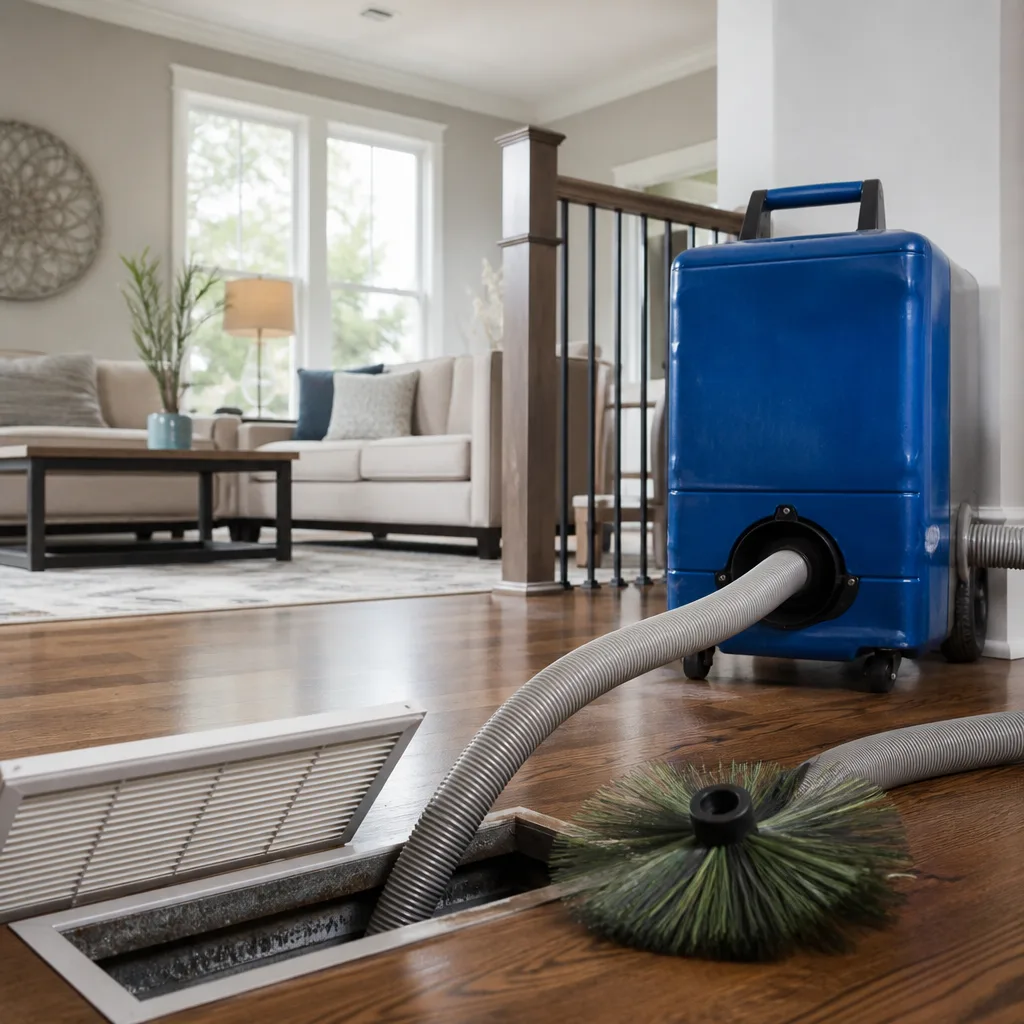
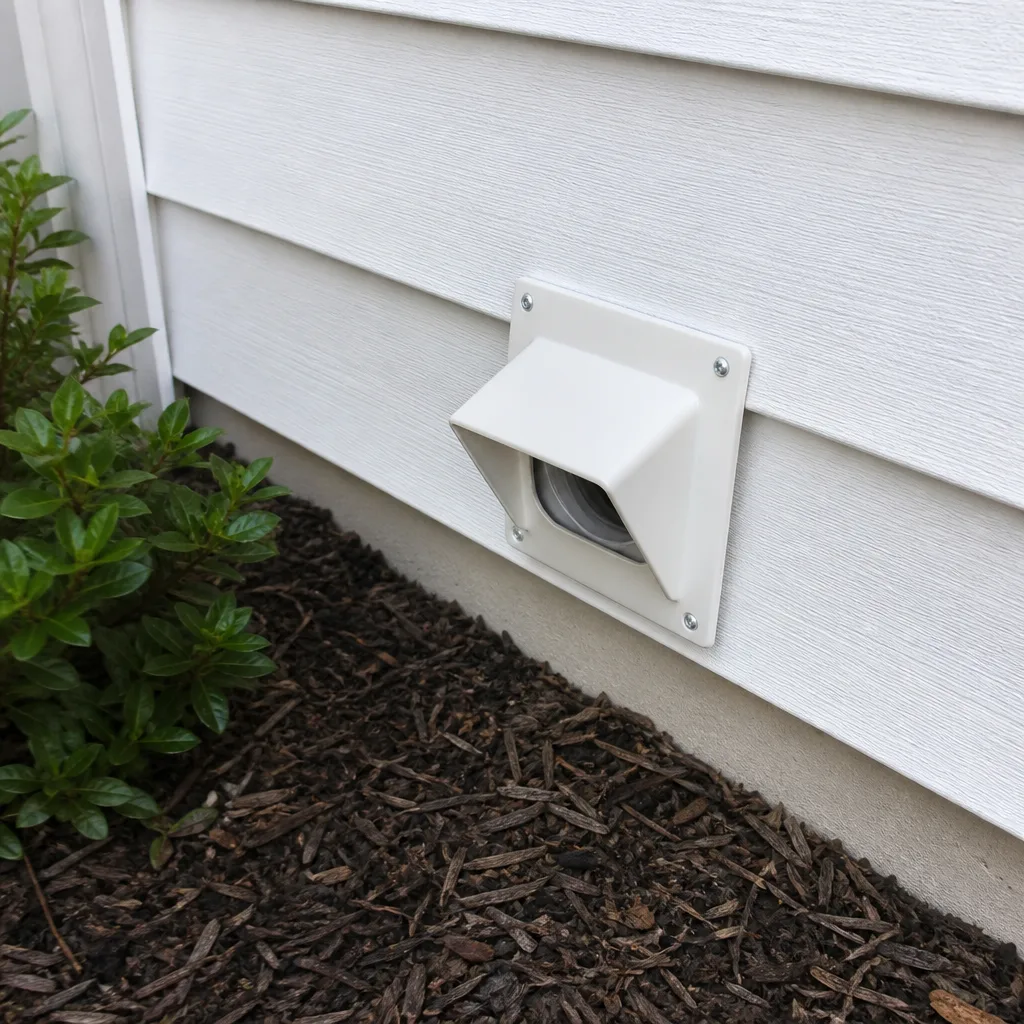
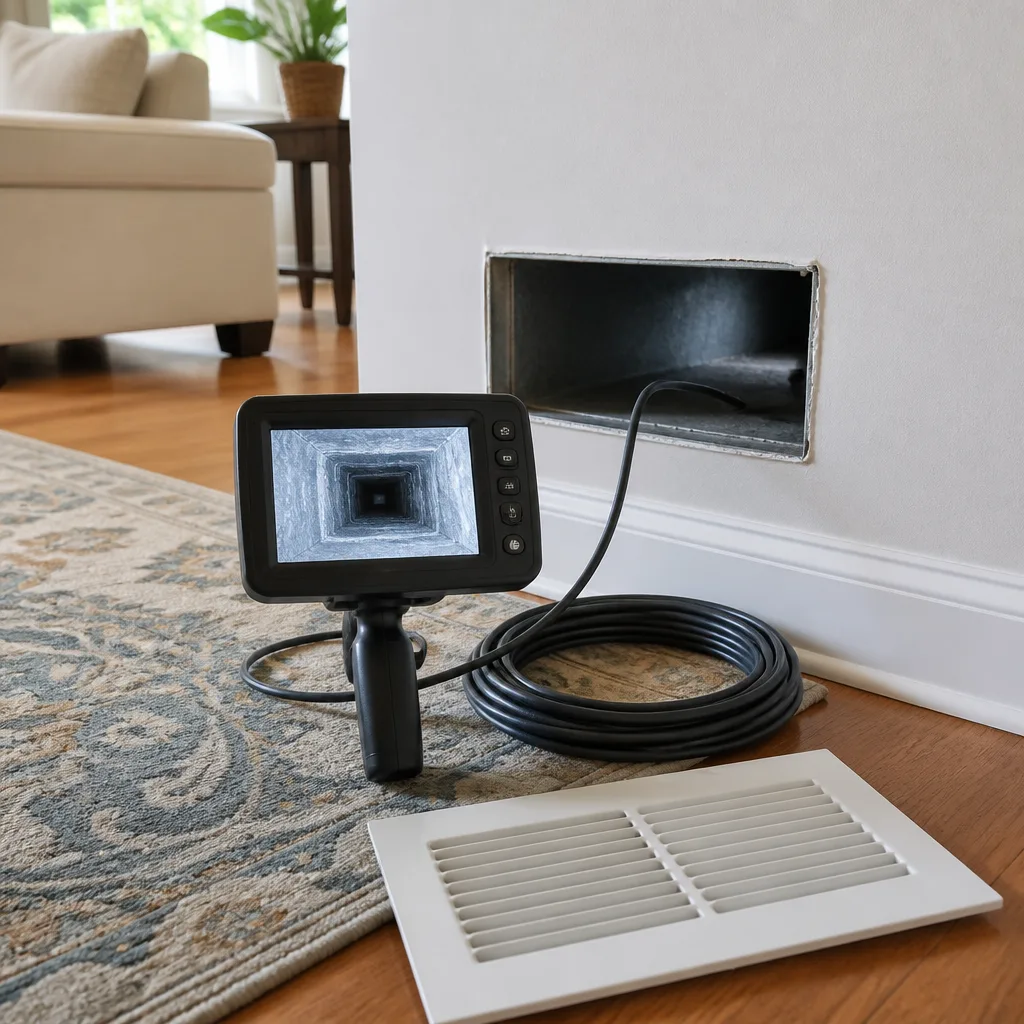
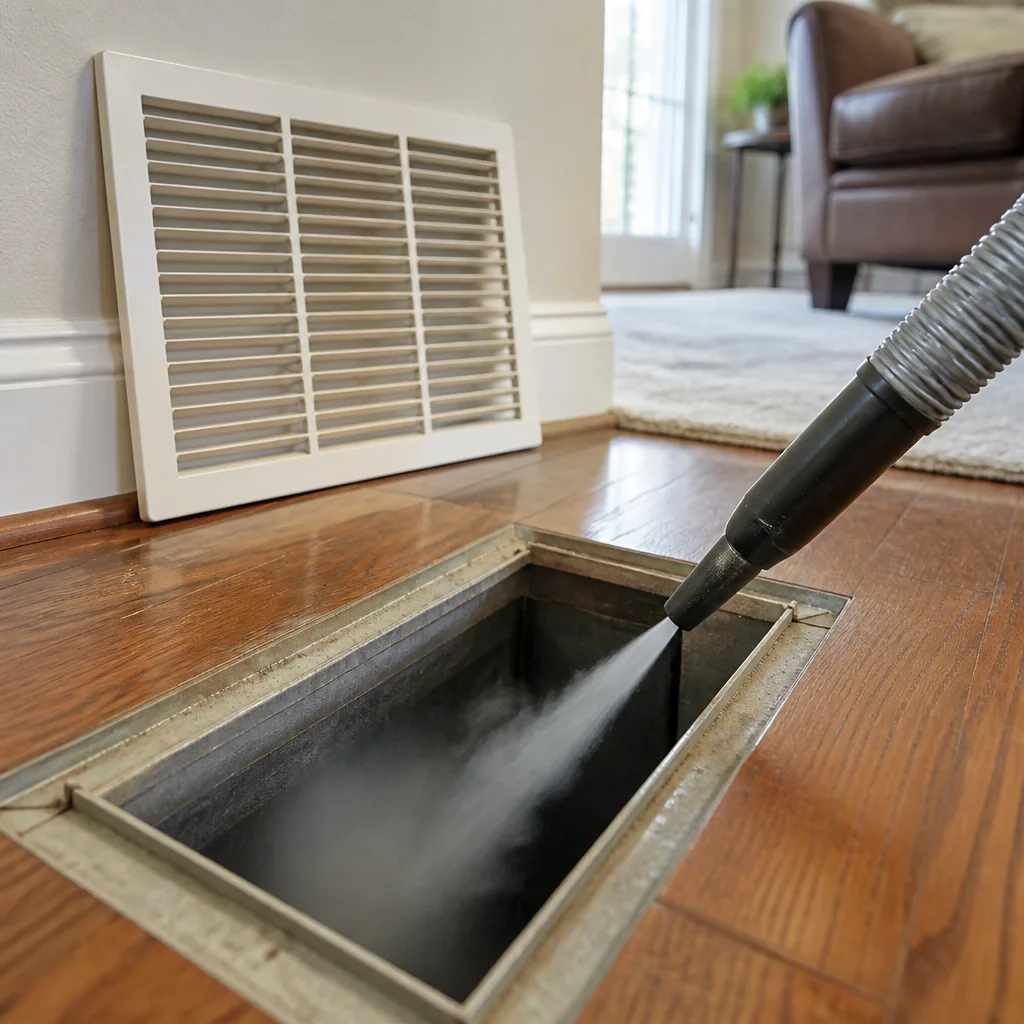
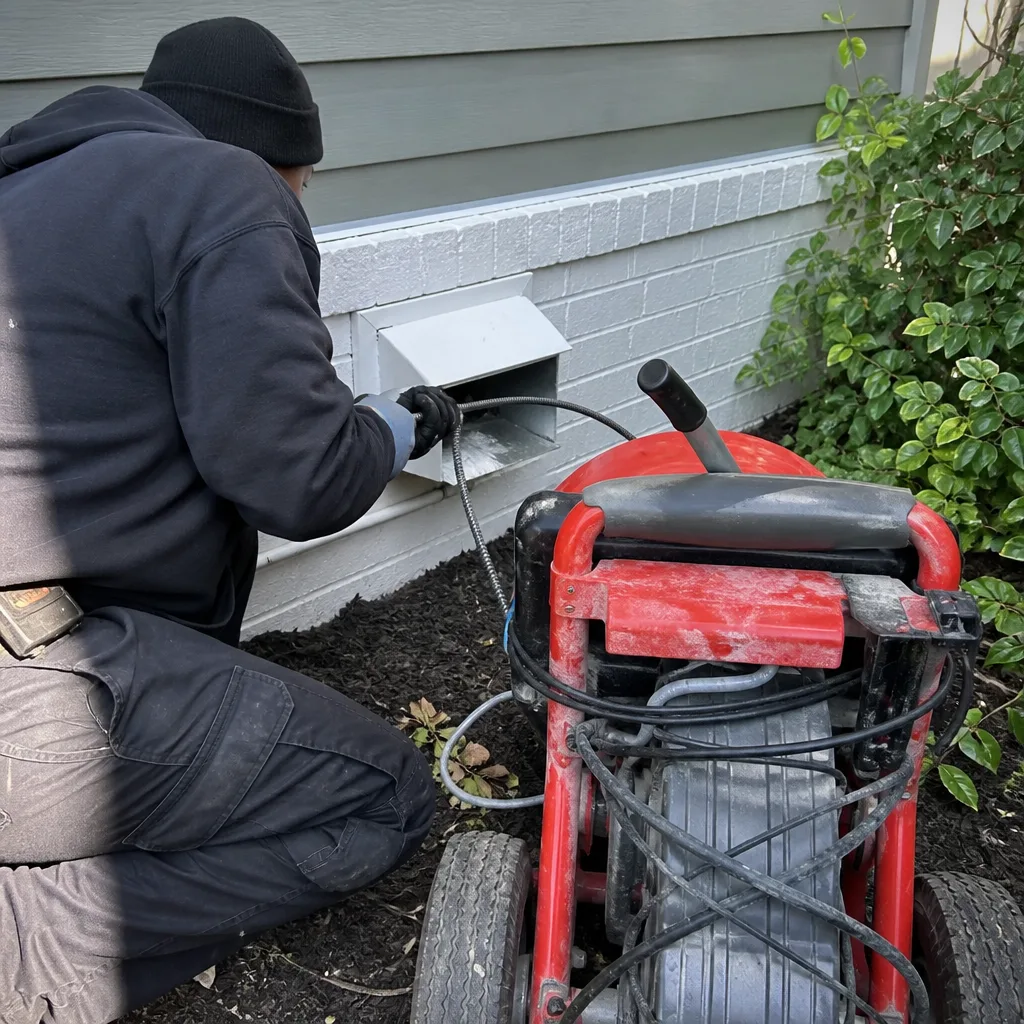
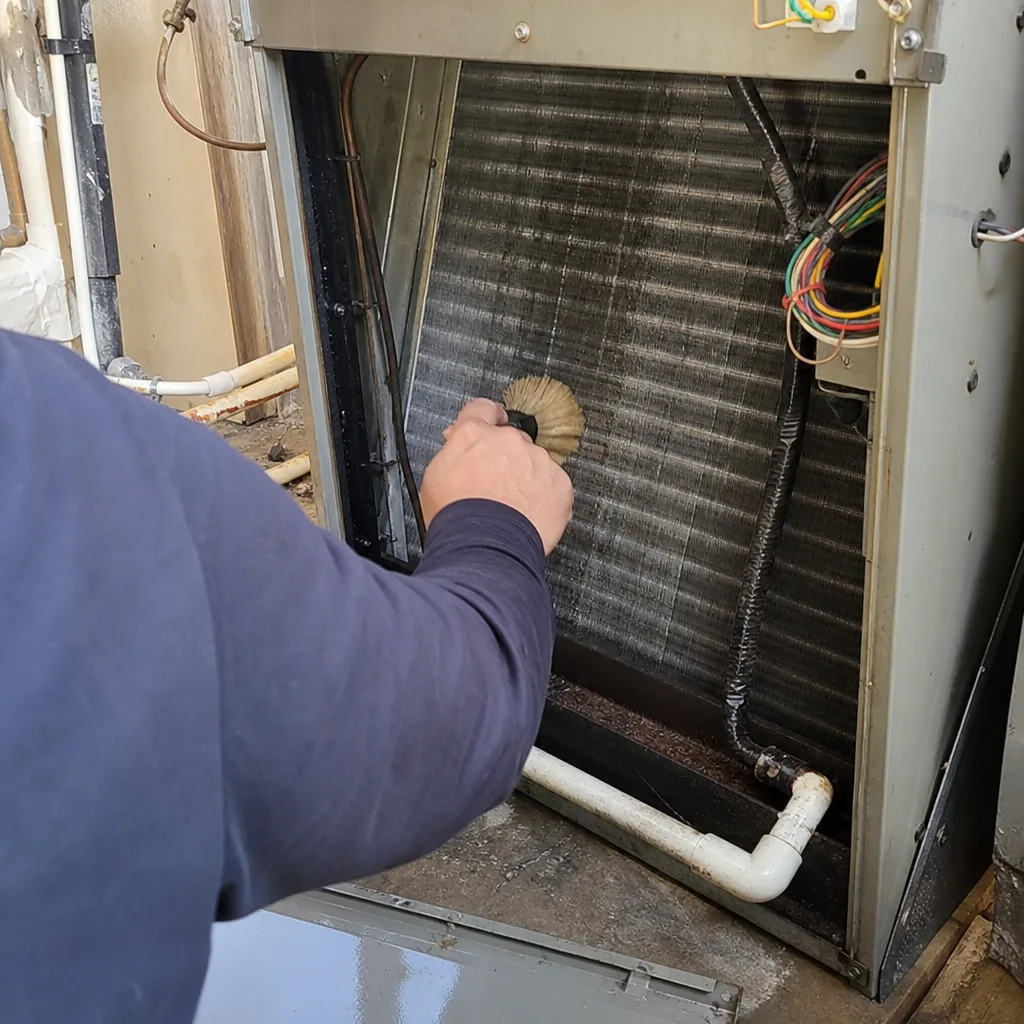
Whole-system duct and dryer vent check with before-and-after photos - you see exactly what came out of your vents
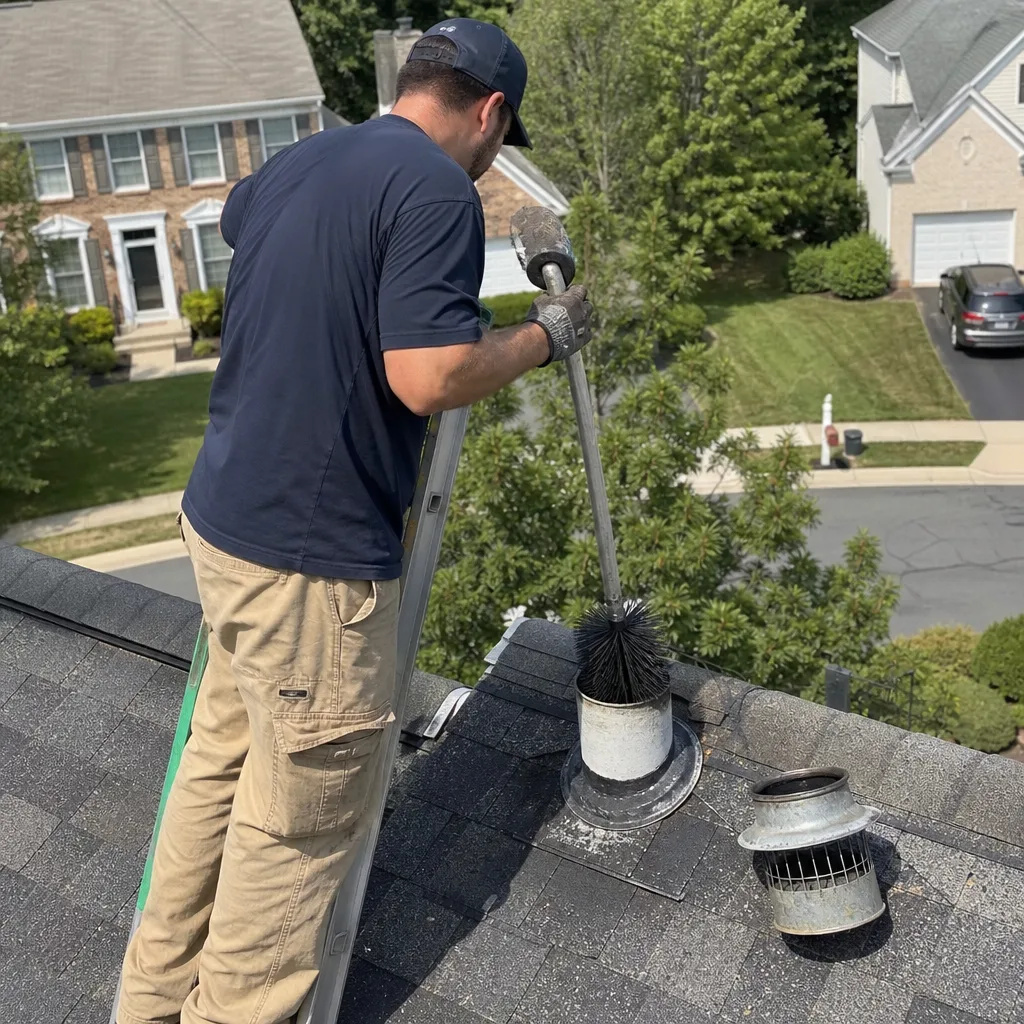
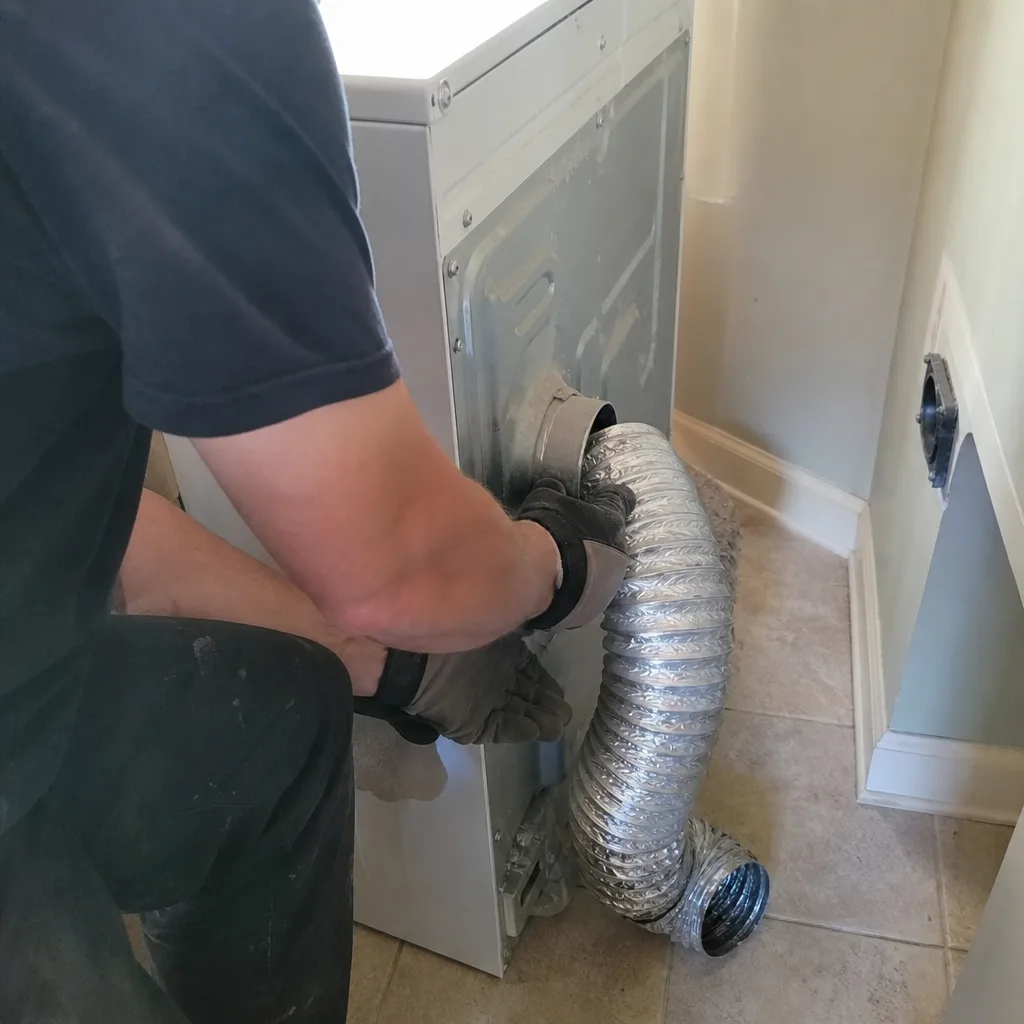
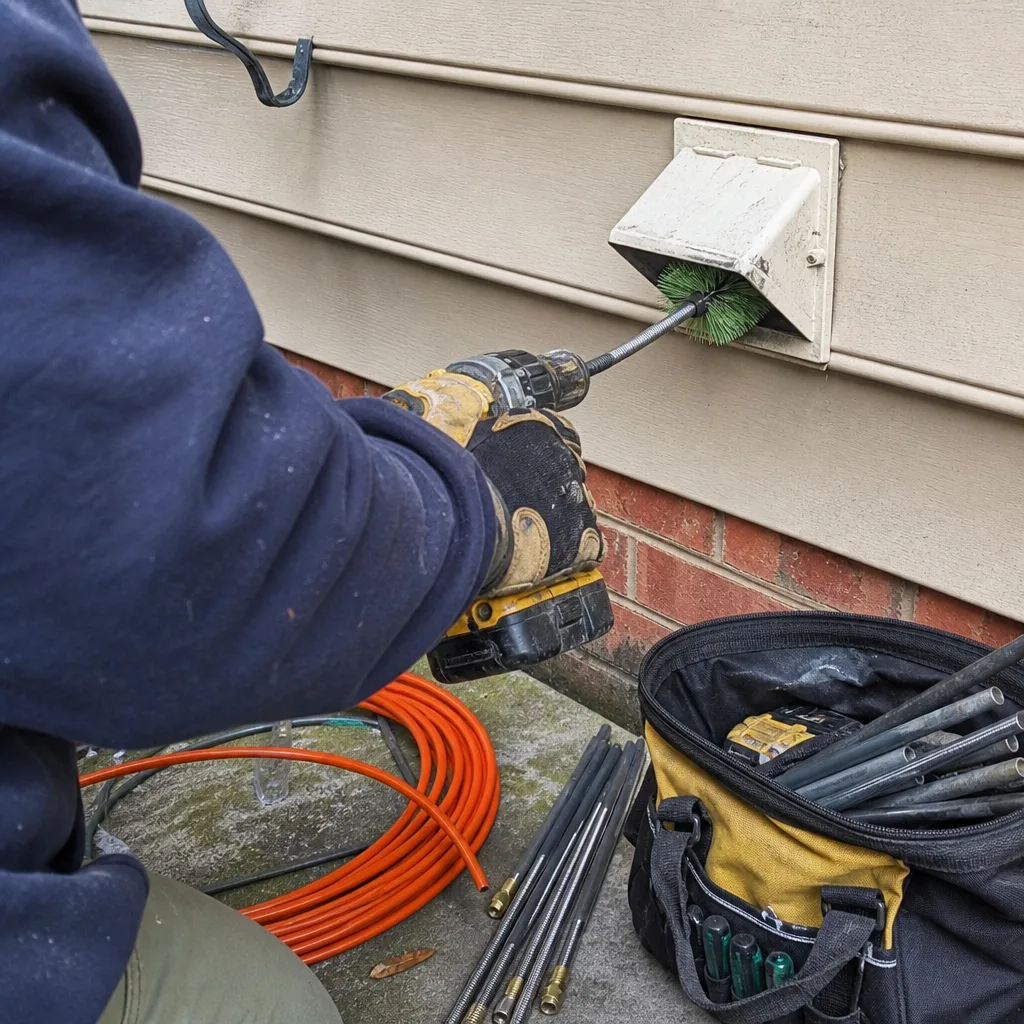
That "$99 whole-house special" is a bait ad - the real number appears once they are in your hallway, or the "clean" is a shop-vac at the register. We photograph the inside of your ducts before and after instead.
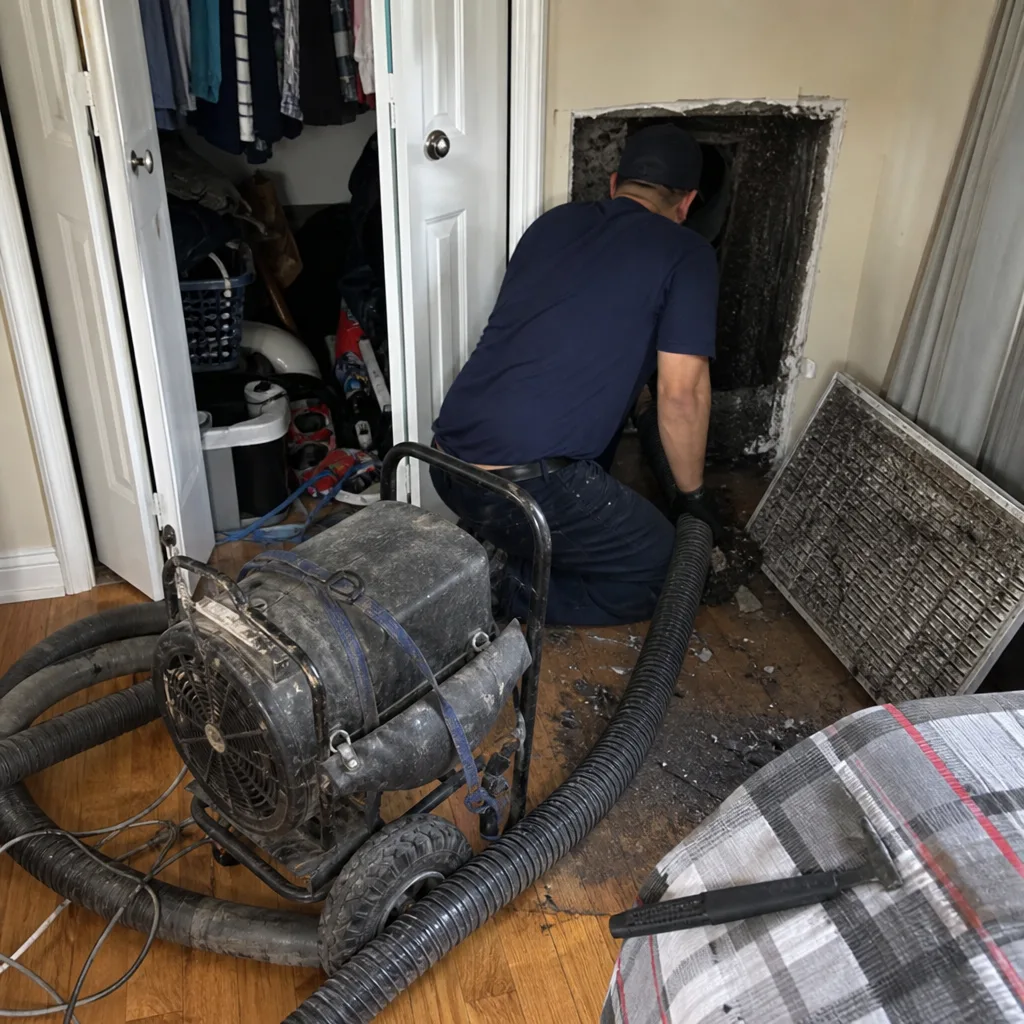 Before
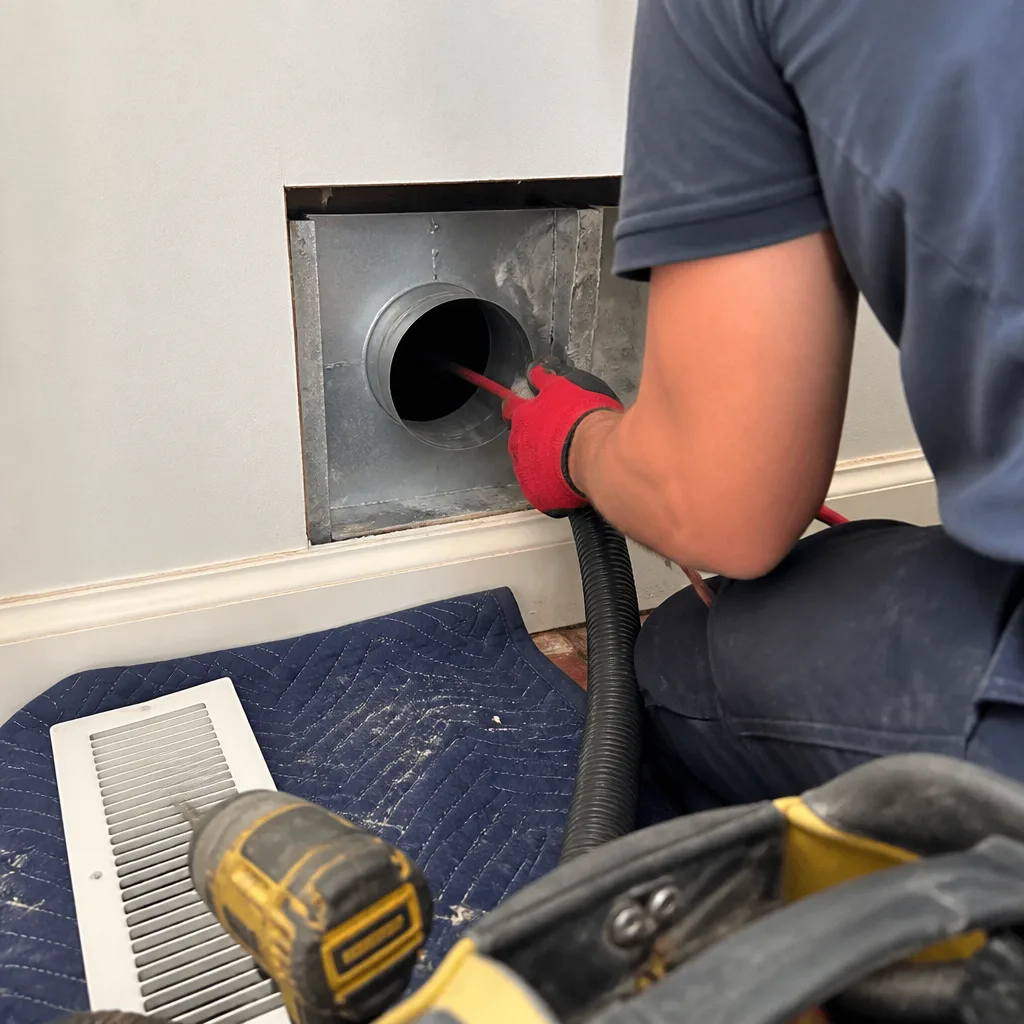 After
After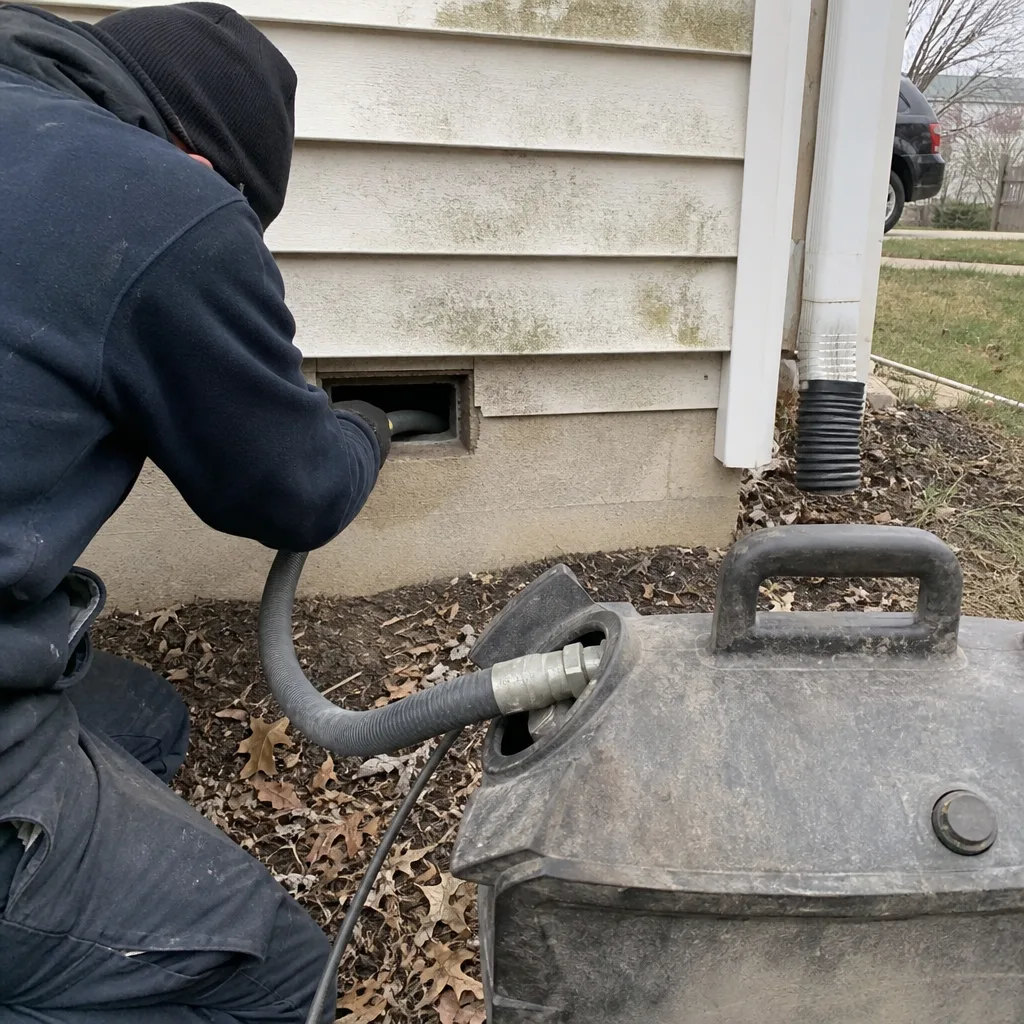 Before
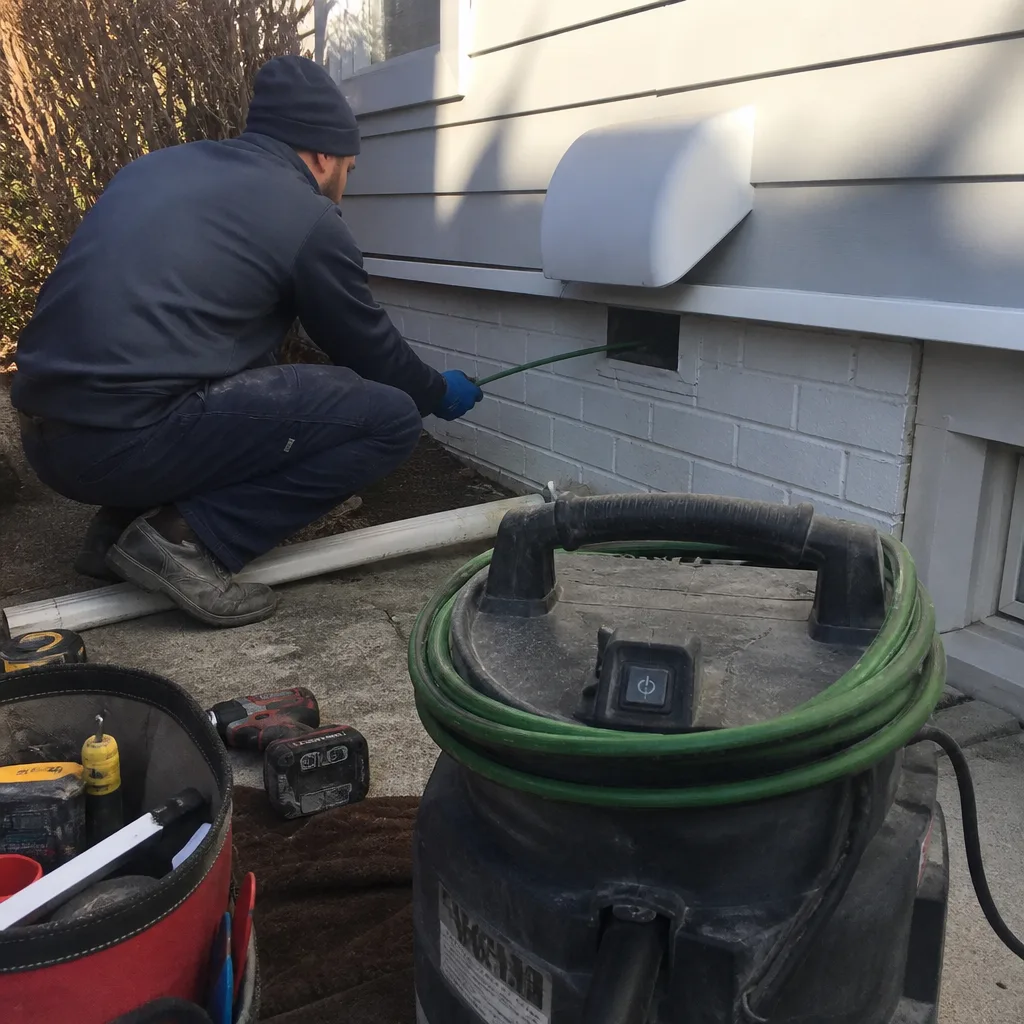 After
After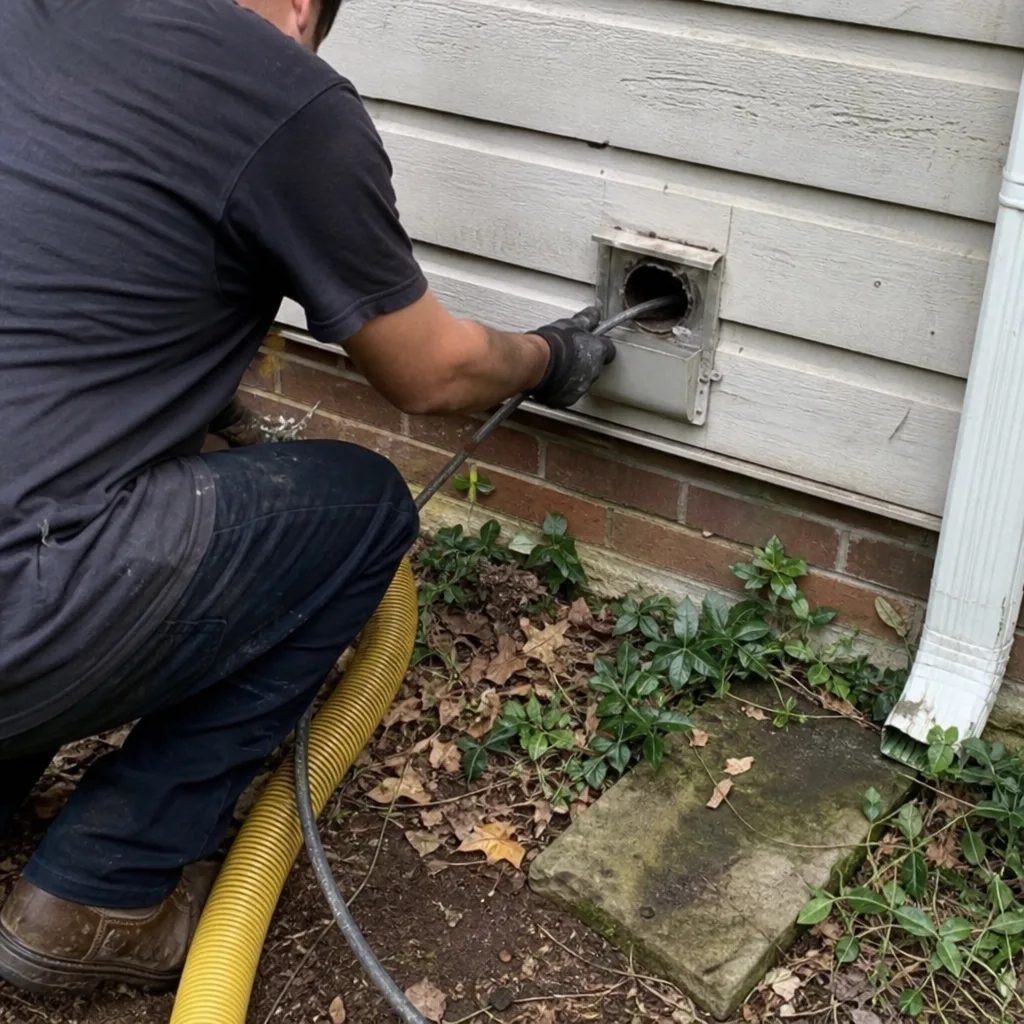 Before
 After
AfterAir Duct Cleaning Permits, Codes & Inspections in VA: What You Need to Know
The $79 coupon company that left a new sheet-metal access panel in your supply plenum just performed work that may require a Class B or Class C mechanical contractor license in Virginia. Your homeowner’s insurance may not cover damage done by an unlicensed worker. In Ashburn and across Loudoun County, the line between “cleaning” and “mechanical contracting” is sharper than most homeowners realize, and crossing it without the right credential can leave you with unpermitted modifications that surface during a home sale inspection. This guide to Air Duct Cleaning in Ashburn shows exactly where that line sits, how to verify who’s allowed to cross it, and what documentation you should demand before anyone touches your ductwork.
Quick Answer
Air duct cleaning itself - the mechanical removal of debris with brushes and negative-pressure extraction - requires no state permit in Virginia. The moment a technician cuts an access panel, modifies ductwork, or applies aerosol sealant, the work crosses into regulated mechanical contracting territory that requires DPOR licensure and may trigger local inspection in Loudoun County. Homeowners should verify a contractor’s license class before any panel is cut.
Table of Contents
- When Duct Cleaning Becomes Mechanical Contracting
- Virginia DPOR Licensing: What Each Class Covers
- Loudoun County Mechanical Inspections and Local Requirements
- Aerosol Duct Sealants: Licensing and Disclosure Rules
- How to Verify a Virginia Mechanical Contractor License
- The Home Sale Liability Scenario
- What to Demand Before Work Starts
- Ashburn-Specific Considerations: Climate, Codes, and Market
BeforeAfterWhen Duct Cleaning Becomes Mechanical Contracting
Virginia draws a bright line between maintenance and modification, and that line runs straight through your ductwork.
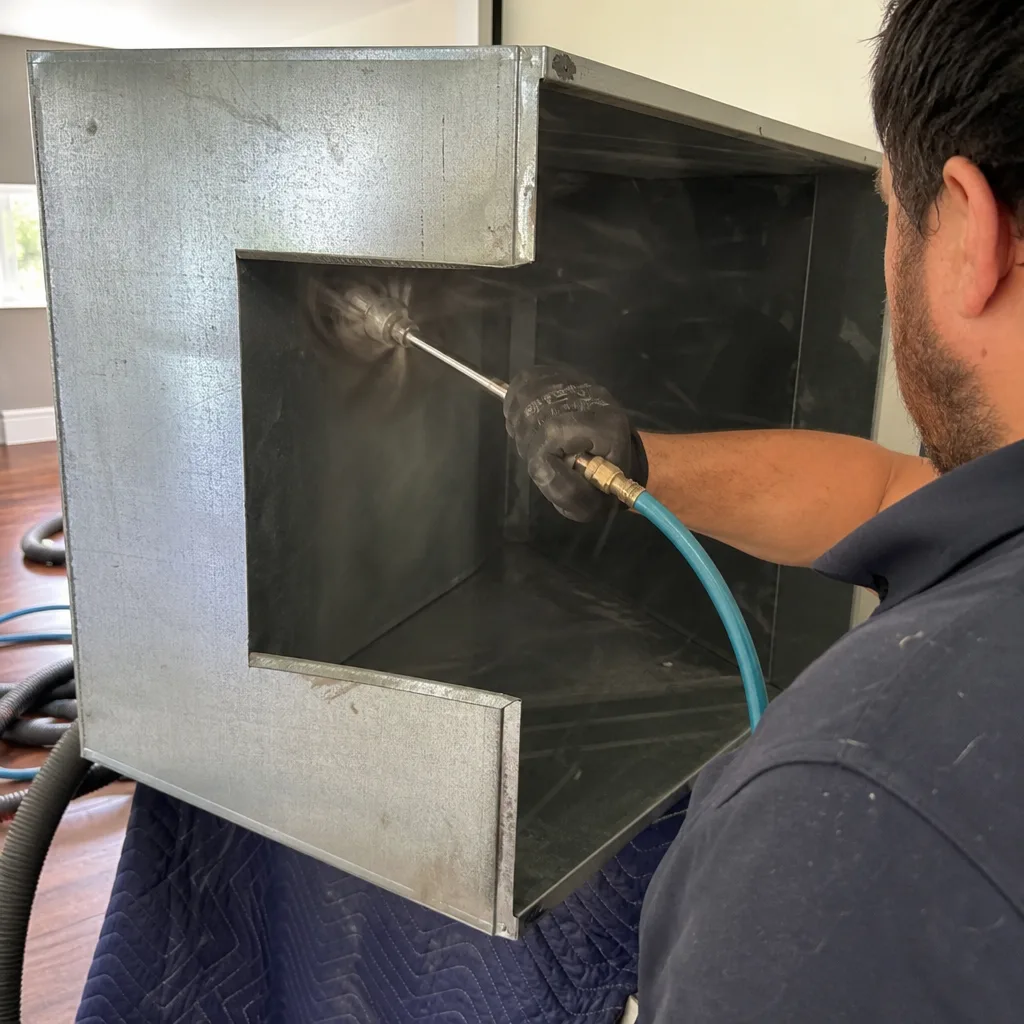
Under Code of Virginia § 54.1-1100, “mechanical contracting” includes the installation, repair, or modification of heating, ventilation, and air conditioning systems and their appurtenances. The Department of Professional and Occupational Regulation (DPOR) has interpreted this to cover any work that alters the physical structure or sealed integrity of a duct system. Cleaning alone - brushing and vacuuming the interior of existing ducts without penetration - sits on the maintenance side of that line. But common practices in the duct cleaning industry routinely cross it.
Here is where most homeowners get caught unaware:
- Access panel installation: Cutting a 6-inch or 8-inch sheet-metal access panel into a plenum or trunk line to reach interior ductwork is a physical modification. It requires sealing, structural integrity consideration, and often impacts airflow dynamics. DPOR considers this mechanical contracting work.
- Duct sealing with mastic or tape: Applying sealant to existing joints as part of a cleaning visit can fall under repair or modification, depending on scope and whether the sealant changes the system’s rated performance.
- Duct repair: Any patching, reconnecting of separated sections, or replacement of damaged flex duct is unambiguously mechanical contracting.
- Aerosol-based sealant application: Products like Aeroseal that inject sealant particles into pressurized ductwork to seal leaks from the interior are treated as system modification in most Virginia jurisdictions, including Loudoun County.
The air duct cleaning in Ashburn market includes operators at every point on this spectrum. Some perform true cleaning-only work with portable brush systems and vacuum extraction, never cutting a panel. Others routinely install access panels as a “standard part of the service,” leaving homeowners with modified ductwork and no documentation of who performed the modification or whether they were licensed to do so.
We’ve documented this in Ashburn homes since 2013. On one visit to a Broadlands townhouse built in 2017, our camera found a 6-inch access panel in the supply plenum that had been cut by a previous cleaner and sealed with foil tape that was already failing. The homeowner had no record of the work. The panel was allowing conditioned air to leak into the unfinished basement, and because the modification was unpermitted and performed by an unlicensed operator, the homeowner faced a $340 repair to bring the system back to its original condition. Haven Standard Clause 1 - written price before any work starts - applied to that repair, but the original cleaner had left no paper trail at all.
The critical question for any homeowner: Will this visit involve cutting, sealing, or modifying my ductwork in any way? If the answer is yes, the technician needs a mechanical contractor license. Not a business license. Not an EPA 608 certification for refrigerant handling. A DPOR-issued Class A, B, or C mechanical contractor license.
Virginia DPOR Licensing: What Each Class Covers
Virginia issues mechanical contractor licenses in three classes, and the class determines the maximum project value the licensee can undertake. For residential ductwork, the relevant classes are B and C.
| License Class | Maximum Contract Value | Typical Residential Application |
|---|---|---|
| Class A | Unlimited | Commercial HVAC, multi-building developments, government contracts |
| Class B | $120,000 per contract / $750,000 annual aggregate | Whole-system HVAC replacement, extensive duct modification, new construction |
| Class C | $10,000 per contract / $150,000 annual aggregate | Single-access panel installation, duct sealing, residential repair, most duct cleaning with modification |
For the vast majority of CleanRun Air Duct Cleaning Ashburn home visits, Class C is sufficient. A typical residential duct cleaning with one or two access panels, register removal, and mechanical brushing falls well within the $10,000 per-contract limit. The problem is not that the work exceeds the license class. The problem is that many operators performing this work hold no mechanical contractor license at all.
Virginia also requires a Mechanical Tradesman license for individuals performing work under a contractor’s supervision. The tradesman license has its own examination and experience requirements. A legitimate operation will have both: a licensed contractor (the business entity or qualifying individual) and licensed tradesmen (the technicians in your home). Haven Standard Clause 3: Verified Crews requires that every technician’s credentials be confirmed before dispatch, and that the customer receives the technician’s name and license number before arrival.
The EPA 608 certification that many cleaners advertise is irrelevant to this question. That certification allows a technician to handle refrigerants. It says nothing about their authority to modify ductwork. Similarly, NADCA (National Air Duct Cleaners Association) membership indicates adherence to cleaning standards, not licensure to perform mechanical work. Both credentials have value - we reference NADCA standards in our own procedures - but neither substitutes for DPOR mechanical licensure when modification is involved.
Loudoun County Mechanical Inspections and Local Requirements
Virginia delegates significant mechanical code enforcement to local jurisdictions. Loudoun County operates under the Virginia Uniform Statewide Building Code (VUSBC) with local amendments, and its Department of Building and Development administers mechanical inspections for permits issued within county boundaries.
For Ashburn homeowners, this means two layers of regulation: state licensure (DPOR) and local inspection (Loudoun County). Understanding when each applies prevents both code violations and unnecessary permitting costs.
Work exempt from Loudoun County permitting:
- Direct replacement of existing equipment with equipment of similar capacity and type, provided no ductwork modification is required.
- Cleaning, adjustment, and routine maintenance of existing systems, including filter replacement, coil cleaning, and duct brushing without penetration.
- Minor repairs that do not alter the system’s design, capacity, or airflow characteristics.
Work requiring Loudoun County mechanical permit:
- Installation of new ductwork or modification of existing ductwork, including trunk line extensions, plenum modifications, and access panel cuts that alter system capacity or airflow.
- Application of aerosol sealant systems that change the system’s tested leakage rate.
- Any work that requires load calculations or engineering review per VUSBC Section M1401.3.
The gray area - and it is genuinely gray - is access panel installation. Loudoun County inspectors have told us directly that a single, properly sealed access panel for cleaning purposes, installed without altering system capacity, typically does not trigger permitting if performed by a licensed mechanical contractor. But multiple panels, panels in load-bearing plenums, or panels that require structural support modification do trigger review. The difference is judgment-based, which is precisely why credentialing matters. A licensed contractor has the training to make that determination and the liability exposure to make it conservatively.
In Ashburn’s newer construction, particularly the dense developments south of Route 7 built between 2015 and 2023, duct systems are often designed with tighter tolerances and smaller plenums to accommodate conditioned crawl spaces and compact mechanical rooms. An access panel cut in these systems has higher consequence than in the older, oversized ductwork common in pre-2000 homes near Ashburn Village. We’ve photographed systems in Brambleton where a poorly placed panel compromised the structural integrity of a fiberglass plenum, creating a sag that collected condensation and supported mold growth. The original cleaner was unlicensed, uninsured for mechanical work, and unreachable when the homeowner discovered the damage.
Aerosol Duct Sealants: Licensing and Disclosure Rules
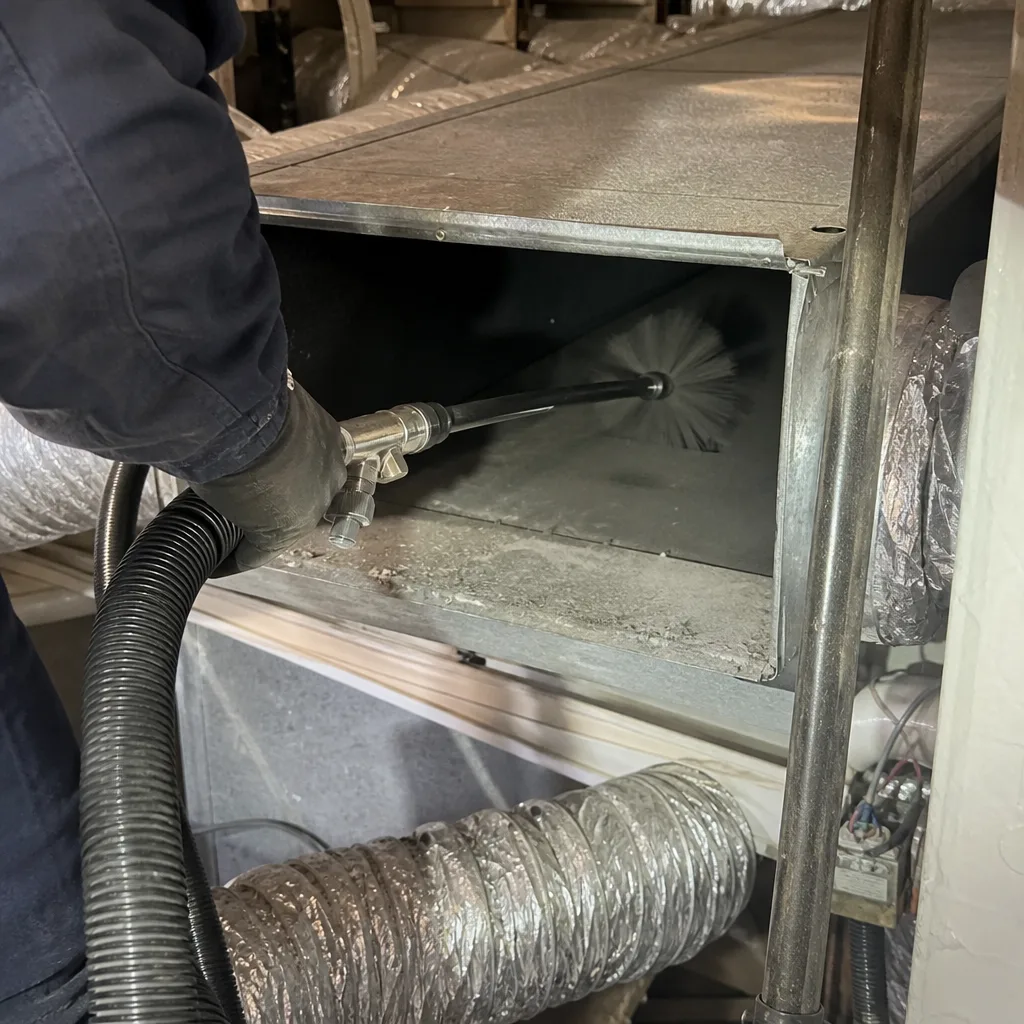
Aerosol-based duct sealing, marketed primarily under the Aeroseal brand, represents the fastest-growing gray area in Virginia ductwork regulation. The technology pressurizes ductwork and injects vinyl polymer particles that accumulate at leak points, forming a seal from the interior. It is effective for sealing leaks inaccessible to manual sealing, and it can reduce duct leakage by 80% or more in some systems.
It is also unambiguously a system modification under Virginia law.
The application process requires:
- Pressurization of the duct system beyond normal operating pressure
- Temporarily blocking all registers and returns
- Injection of sealant material that becomes a permanent part of the duct system
- Post-application testing to verify leakage reduction
Each of these steps alters the system’s physical and performance characteristics. DPOR has confirmed to industry representatives that Aeroseal application requires mechanical contractor licensure. Loudoun County requires a mechanical permit for the work, with pre- and post-sealing leakage testing documented and submitted for inspection.
Yet the residential market in Ashburn and across Northern Virginia includes operators who offer Aeroseal as an add-on to routine cleaning, performed by technicians with no mechanical license and no permit documentation. The homeowner receives a printout showing leakage reduction - often impressive numbers - with no supporting permit, no contractor license verification, and no record of what material was injected into their air distribution system.
The disclosure gap is equally problematic. Aeroseal’s safety data sheet identifies the sealant as a vinyl acetate polymer with specific handling requirements. Homeowners with chemical sensitivities, young children, or certain respiratory conditions should receive this information before application. CleanRun’s protocol, established in 2013 and maintained through our equipment partnership with Abatement Technologies and Honeywell air quality monitoring tools, includes material disclosure as a standard pre-work document. Haven Standard Clause 2: Informed Consent requires that every customer know what enters their home before any sealant, cleaning agent, or treatment is applied.
For homeowners considering aerosol sealing, the verification checklist is straightforward:
- Confirm the contractor holds a current DPOR mechanical license (Class C minimum, Class B for whole-system work).
- Request the Loudoun County mechanical permit number and verify it with the Department of Building and Development.
- Obtain the pre-sealing leakage test results in writing, with the testing standard identified (typically ASTM E1554 or equivalent).
- Receive the post-sealing test results and permit closure documentation before final payment.
Without these four items, the work exists in a regulatory void. Your home inspector will not find permit records. Your insurance carrier may dispute coverage for related damage. And your buyer’s agent, if you sell, will flag the undocumented modification.
How to Verify a Virginia Mechanical Contractor License
Virginia’s DPOR maintains a public license lookup that any homeowner can use. The process takes under two minutes and requires no registration. Here is the exact procedure:
- Navigate to license.dpor.virginia.gov/lookup
- Select “License Lookup” from the main menu
- Enter the contractor’s business name or the individual’s name in the search field
- Filter by “Mechanical” under License Type
- Review the returned record for:
- License status: must show “Active”
- License class: A, B, or C
- Expiration date: must be current
- Business name match: confirm the entity performing your work matches the licensed entity
- For tradesman-level verification, repeat the search with the individual technician’s name and filter by “Mechanical Tradesman”
The lookup will also display any disciplinary history, including fines, license suspension, or revocation. A pattern of violations for unpermitted work or unlicensed contracting is a clear signal to select a different provider.
One critical detail: the business name on your written estimate must match the business name on the DPOR license exactly, or the license must list the business as an authorized entity under a qualifying individual. Some operators use a licensed contractor’s number without authorization, a practice DPOR investigates aggressively but cannot prevent in real time. The license lookup shows the authorized business associations for each license. Cross-reference before scheduling.
In our experience across 52,000+ homes, fewer than one in ten homeowners verify licensure before hiring a duct cleaner. The verification rate rises sharply after a problem surfaces, which is precisely the wrong sequence. Haven Standard Clause 3: Verified Crews exists because verification should happen before the truck arrives, not after the panel is cut.
The Home Sale Liability Scenario
The moment most homeowners discover an unpermitted duct modification is during a pre-sale home inspection. This is not hypothetical. In Ashburn’s active resale market, where homes built between 2015 and 2020 turn over frequently as owners upgrade, we’ve received increasing calls from sellers whose inspectors flagged undocumented ductwork.
The typical sequence:
- Seller lists home in an Ashburn community like One Loudoun or Loudoun Valley Estates
- Buyer’s inspector examines HVAC system, notes new access panel or sealant residue
- Inspector requests permit documentation for the modification
- Seller has no documentation; original cleaner is unlicensed, unresponsive, or out of business
- Buyer’s lender or insurer requires remediation by a licensed contractor with permit closure
- Seller pays emergency rates for work that should have been documented at original completion
The cost of this sequence, in our direct observation, runs $800 to $2,400 depending on the modification scope and the compressed timeline. The original “savings” from the unlicensed cleaner evaporate, and the seller faces stress during an already demanding transaction.
Virginia’s residential property disclosure statement (required by Code of Virginia § 55.1-703) asks sellers to identify “any structural modifications made without required permits.” Ductwork modifications fall under this requirement. A seller who checks “no” without investigating, then has unpermitted work discovered, faces potential fraud claims from the buyer. Even innocent nondisclosure creates liability exposure that a simple license verification would have prevented.
The protective action is simple: demand documentation at the time of service, and retain it with your home records. CleanRun’s standard deliverable includes the written scope (Haven Standard Clause 1), the documented photo record of every duct run before and after, and for any permitted work, the permit application and closure documents. These are not marketing materials. They are transaction documents that protect your property value.
What to Demand Before Work Starts
The duct cleaning industry’s reputation for opacity is earned. The antidote is specific documentation, requested before scheduling and received before payment. Here is what a properly documented duct service should include:
| Document | What It Proves | Red Flag If Missing |
|---|---|---|
| Written scope and price | Exact work to be performed, with line-item costs | Verbal estimate, “call for quote,” or price given only after inspection |
| Contractor license verification | DPOR-issued mechanical license, active and current | Business license only, EPA 608 only, or refusal to provide number |
| Tradesman identification | Name and license of technician performing work | Unnamed crew, subcontractor with unverified credentials |
| Permit documentation (if applicable) | Loudoun County mechanical permit, application and closure | Assurance that permit “isn’t needed for this small job” |
| Material safety data (if sealants used) | Chemical composition, handling requirements, re-entry time | “It’s all natural” or “EPA approved” without specific documentation |
| Before/after photo record | Visual documentation of every duct run addressed | No camera used, or photos shown on device but not delivered |
| Written warranty or guarantee | Remedy path if work is defective or incomplete | “Satisfaction guaranteed” with no written terms |
CleanRun’s 365-Day Done Right Promise is a written guarantee, not a verbal assurance. It specifies that if any work is found defective within 365 days of completion, we return to correct it at no charge. The promise is backed by the full H.A.V.E.N. Standard and included as a signed document on every job. This is not exceptional service. It is the minimum accountability that mechanical work should carry.
Our equipment roster - Nikro negative-pressure extraction systems, Aprilaire media filtration, Abatement Technologies HEPA containment, and Honeywell air quality verification tools - is named specifically so customers can research what enters their home. Professional-grade equipment is verifiable. “Industrial-strength” is not.
Ashburn-Specific Considerations: Climate, Codes, and Market
Ashburn’s position in western Loudoun County creates specific conditions that affect ductwork regulation and service quality.
Climate and construction timing: The building boom from 2015 to 2023 produced thousands of homes with flex duct systems installed during peak construction velocity. In our documentation from Ashburn neighborhoods, we’ve found higher-than-expected rates of duct compression, improper support, and sealant degradation in homes built during this period. The 2021 International Energy Conservation Code (IECC) amendments adopted by Loudoun County tightened duct leakage requirements, meaning newer homes have less tolerance for modification error. An access panel cut without proper sealing in a 2022-built home fails code more severely than the same panel in a 1995-built home with leakier baseline construction.
HOA and community standards: Many Ashburn communities, including those managed by prominent associations in Brambleton and Lansdowne, require contractor insurance certificates and license verification for any work performed on common elements or visible from the exterior. While ductwork is interior, the contractor’s vehicle presence and exterior equipment (compressor washing, vent access) can trigger HOA scrutiny. A properly licensed contractor carries the insurance documentation these associations require. An unlicensed operator often does not.
Resale velocity: Ashburn’s home turnover rate exceeds the Virginia average, with median ownership duration under seven years in several census tracts. This means the typical homeowner will sell sooner than the national average, making documentation retention and permit compliance more immediately relevant. The unpermitted modification you ignore today becomes the inspector’s finding at your closing in 2027.
Local enforcement patterns: Loudoun County’s Department of Building and Development has increased mechanical inspection staffing since 2022, and permit compliance is a stated priority in the county’s current strategic plan. The probability of unpermitted work discovery - whether through complaint, sale inspection, or insurance claim - is rising, not falling.
For HVAC cleaning in Ashburn specifically, the integration of duct cleaning with full system maintenance creates additional licensing complexity. A technician who cleans coils, replaces filters, and brushes ducts without modification needs no mechanical license. The same technician who discovers a disconnected return duct and reconnects it has crossed into regulated work. The boundary is the action, not the intention. CleanRun technicians are trained to stop, document, and obtain customer authorization with full license disclosure before any repair action - a protocol that protects both the homeowner and the technician’s standing with DPOR.
Common Mistakes to Avoid
- Assuming “certified” means licensed. NADCA certification, EPA 608, and manufacturer training certificates are valuable credentials, but none authorize mechanical contracting in Virginia. Only DPOR licensure does.
- Accepting access panel installation without asking about licensure. The panel itself seems minor, but it is a physical modification with code implications. Ask before the cut.
- Paying for aerosol sealing without permit documentation. Aeroseal and similar products are effective but regulated. The permit is your proof that the work was performed to code and will not surface as a liability.
- Discarding service documentation. Keep written scopes, photo records, and permit documents with your home files. The typical Ashburn homeowner sells within seven years, and these documents become transaction assets.
- Hiring based on coupon price alone. The $79 duct cleaning in Ashburn is a well-documented loss-leader model that recoups through upsold modifications, often performed without proper licensure. The low entry price carries hidden liability.
- Failing to verify the business name against the license. A contractor who shows you a license number may be borrowing it from another entity. The DPOR lookup shows authorized business associations. Check it.
- Ignoring the technician’s individual credentials. Virginia requires tradesman licensure for individuals performing mechanical work, not just the business entity. Ask for the technician’s name and license number before arrival.
When to Call a Professional
Call a licensed mechanical contractor when your duct service involves any modification: access panel installation, duct sealing beyond surface brushing, aerosol application, or repair of damaged sections. Call when you need documentation that will survive a home sale inspection. Call when the work was performed by an unknown or unverified provider and you need assessment of what was actually done.
CleanRun Air Duct Cleaning Ashburn offers free estimates in Ashburn and across Loudoun County. Every estimate is written, itemized, and delivered before any work is authorized. Our license numbers are provided on request and verified through DPOR. Call (240) 771-1508 to schedule an assessment or to obtain a free second opinion on any written estimate from another provider.
Frequently Asked Questions
No. Mechanical cleaning of existing ductwork - brushing, vacuuming, and debris removal without physical modification - requires no state or local permit in Virginia. The moment the work involves cutting access panels, modifying ductwork, or applying sealant, permitting and licensure requirements apply. If you’re unsure which category your service falls into, explore our more guides & resources or ask your provider specifically what physical changes will be made to your system.
Single access panel installation by a licensed Class C mechanical contractor in the Ashburn market typically runs $180 to $340 including permit application, with Loudoun County permit fees adding $75 to $150 depending on project scope. Aerosol duct sealing with full permitting and testing documentation ranges from $1,200 to $2,800 for a typical 2,000-square-foot home. These are whole-system prices, not per-vent figures. Call (240) 771-1508 for an exact quote - estimates are free.
The low-quote model typically excludes licensure compliance, permit costs, insurance for mechanical work, and documented deliverables. A $79 coupon covers vacuum noise in accessible areas, often performed by unlicensed technicians using consumer-grade equipment. The provider then upsells modifications at inflated rates, frequently without proper licensure. CleanRun’s pricing includes licensed technicians, professional-grade equipment from Nikro and Abatement Technologies, and full documentation - priced upfront with no post-arrival changes.
Demand a documented photo record of every duct run, delivered as part of your job file, not shown briefly on a handheld device. CleanRun photographs the interior of every duct run before and after service, with timestamps and location labels, as a standard deliverable since 2013. If your provider cannot produce this documentation, you have no verification that the work occurred.
For typical Ashburn homes with standard fiberglass filter maintenance, mechanical duct cleaning is indicated every three to five years based on debris accumulation visible through inspection. Homes with pets, recent construction, or occupants with respiratory conditions may need more frequent service. The definitive answer comes from camera inspection of the duct interior, not from a calendar schedule. We provide this inspection as part of our standard estimate process.
The buyer’s inspector will flag the modification, the buyer’s lender or insurer may require remediation by a licensed contractor with permit closure, and you as seller will bear the cost and timeline compression. In Virginia, the residential property disclosure requires reporting of unpermitted structural modifications. The protective action is to verify licensure and obtain permit documentation at the time of original service, then retain it with your home records.
Yes. Our DPOR mechanical license numbers are provided on every written estimate and available on request before scheduling. Haven Standard Clause 3: Verified Crews requires that every customer receive technician identification and license verification before arrival. This is not proprietary information - it is public record, and any legitimate contractor should provide it without hesitation.
The Bottom Line
Virginia’s regulatory framework for ductwork is clear in principle but frequently blurred in practice. Cleaning requires no permit. Modification requires licensure and may require local inspection. The homeowner’s protection lies in asking the specific question - will this visit modify my ductwork? - and verifying the answer against public records. In Ashburn’s active market, where home sales come quickly and inspector scrutiny runs high, documentation retained today prevents liability surfaced tomorrow. The $79 coupon is not cheaper if it leaves you with unpermitted modifications, undocumented work, and a technician who cannot be found when the problem appears.
Written by Tomas Reyes, Owner at CleanRun Air Duct Cleaning Ashburn, serving Ashburn since 2013.